


At a Glance
To graduate, every student in the Mountain View-Los Altos School District (MVLA) must complete 5 units — one semester’s equivalent — of Health Education. Whether the class is taken in-person during the school year, online on Edgenuity or on approved out-of-district providers, the requirement almost always stands. But starting next school year, that might not be the case.
An email sent from MVLA to all students via StudentSquare on March 13 said that “Beginning with the Class of 2030, Health must be completed through traditional in-person, in-seat instruction only.” The email did not provide reasoning for this change.
For the time being, however, options for completing one’s Health graduation requirement at Los Altos High School are plentiful. The Talon decided to investigate each of the primary options — in-person and Edgenuity — to better understand them and their curricula.
Outlining the Courses: In-Person
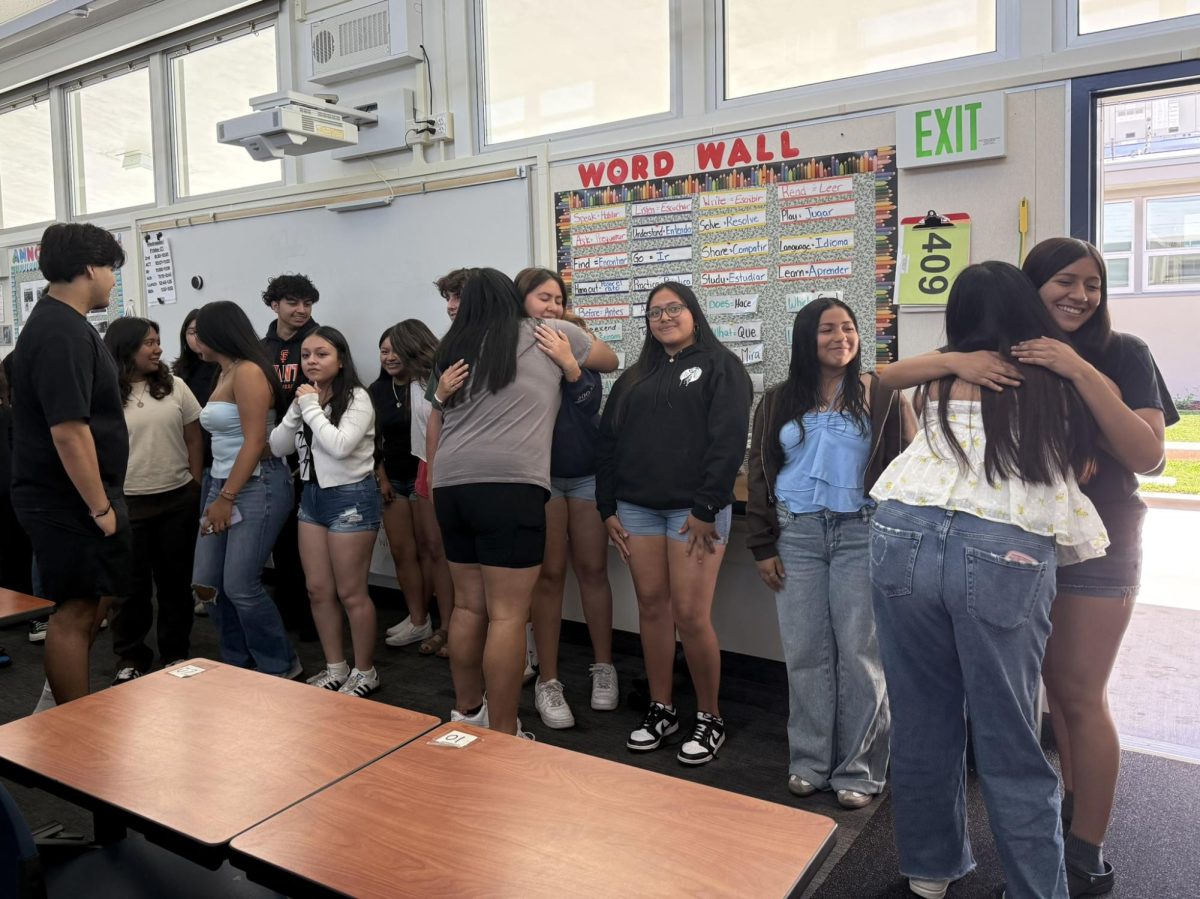
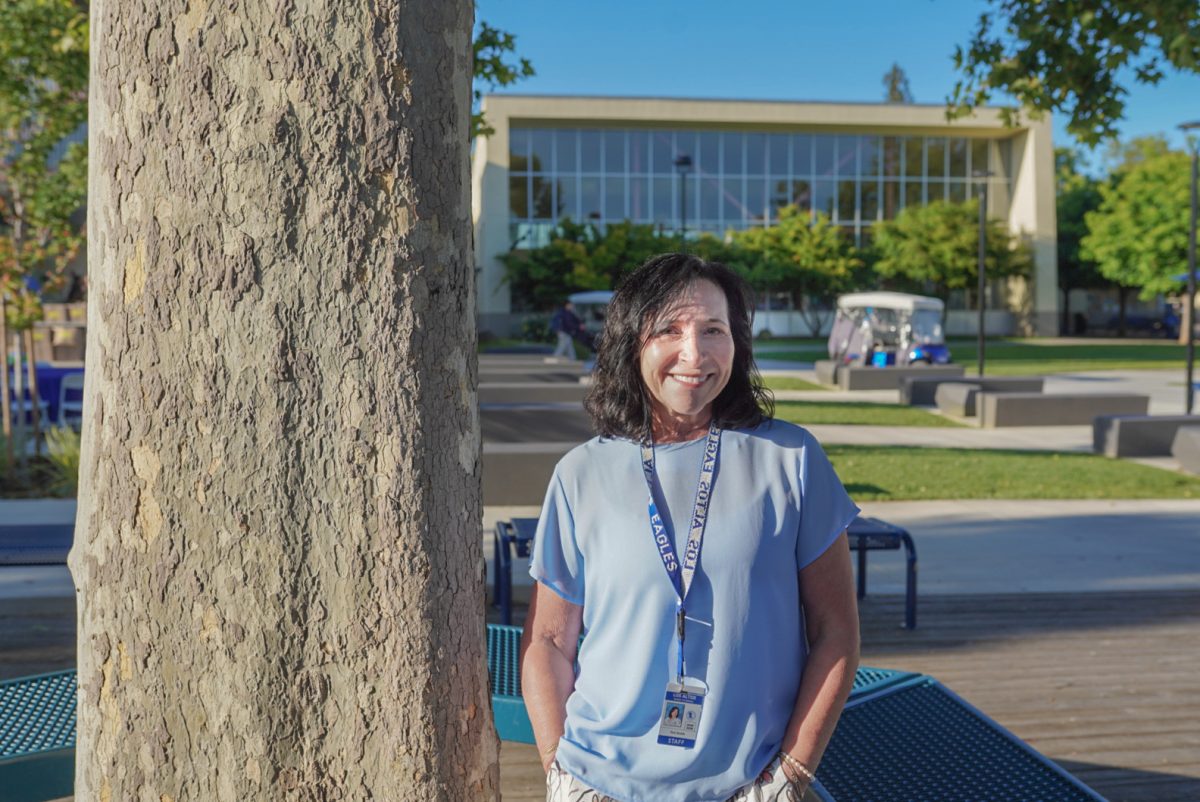
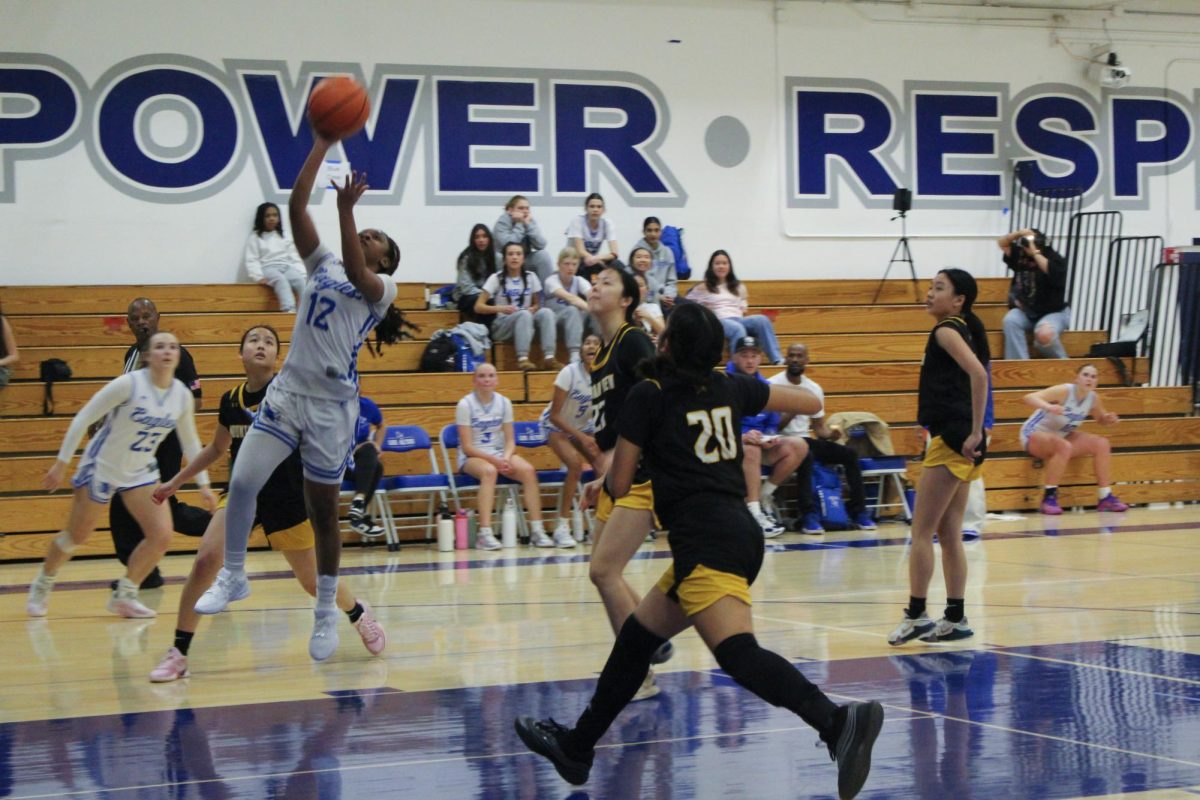
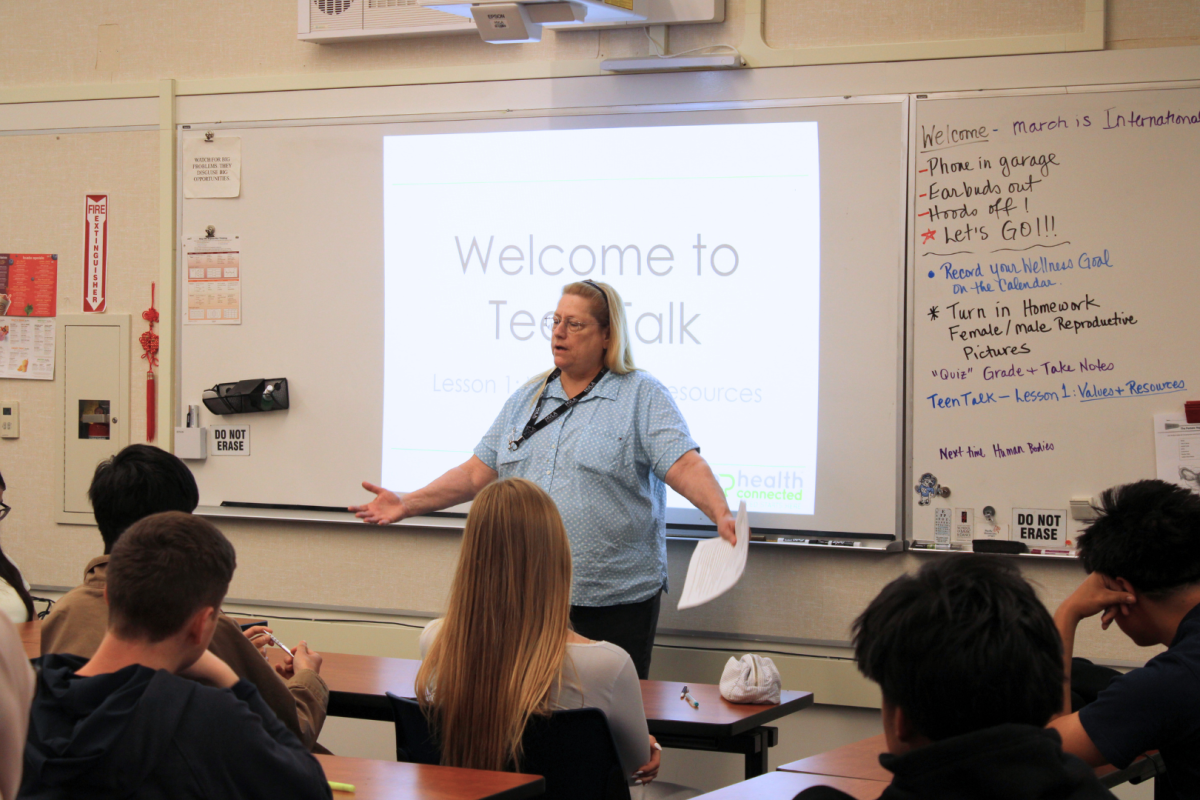
On-campus health at LAHS is the domain of its singular teacher, Vickie Christensen. Christensen, who has taught Health at LAHS for 30 years, said she doesn’t use traditional teaching models of lecturing and assessments — rather, she focuses on role-playing to teach students how to navigate real-world situations. She said it appears most often when discussing suicide prevention and communication styles in relationships.
“This is not your eighth-grade health class,” Christensen said. “This is your stepping stone to adulthood.”
Overall, the course comprises 6 units: Wellness & Sleep; Nutrition & Fitness; Mental Health; Human Sexuality; Substance Use and Medicine Literacy.
Through role-playing and class conversations, Christensen said she emphasizes not just learning the facts, but understanding social stigmas that affect topics such as suicide and healthcare.
Each of the five students The Talon interviewed about in-person Health said they learned something new from the course. However, they also all expressed concerns about the course’s limitations, such as its single-semester length, small department size and ability to cover stigmatized topics.
While the intention to break social stigmas was expressed by the course, some students said the class environment prevented them from speaking openly.
“There is definitely the intention to make the environment safe, but it’s not really being done in an effective way,” an anonymous student said. “It’s being done so artificially that it has the opposite effect, and nobody wants to talk about anything.”
In particular, this student wanted more discussion of the social implications of eating disorders.
“The fact that fatness is stigmatized is why people feel like it’s bad,” they said. “People don’t worry about health repercussions as much as they worry about social repercussions. It has to be an academic and social course, but it hasn’t found a good way to mix both of those yet.”
Christensen said she tries to cover social aspects of such issues to the best of her ability, but also recognized the limited time frame of the course, which makes it a challenge.
Outlining the Courses: Online
Superintendent Eric Volta said 40% of district students fulfill the Health graduation requirement through a self-guided digital alternative offered on Edgenuity, which is district-vetted.
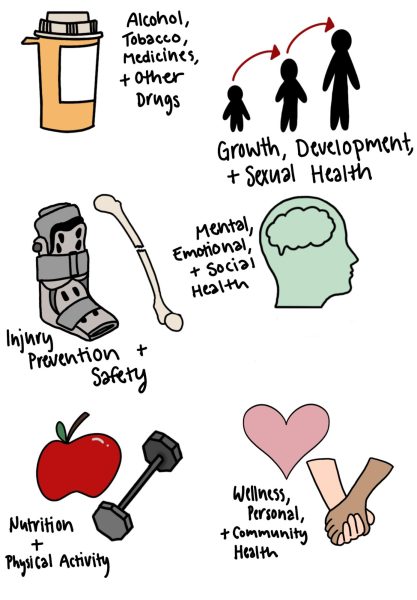
The online curriculum is organized into 5 units of pre-programmed videos and assignments, different from the in-person course: Alcohol, Tobacco and Other Drugs; Nutrition and Physical Activity; Growth, Development and Sexual Health; Mental and Emotional Health and Personal and Community Health.
LAHS choir teacher Lauren Diez facilitates the online course. Diez said she only sees and grades students’ assignments; she does not manage or modify course content.
Because the course is self-paced, students who take online Health during the school year said they may fall behind as they balance other in-person classes. That’s the case for senior Jeronimo Sepulveda Sagaseta, who found himself falling behind several weeks after beginning the online course this semester.
According to Jeronimo and two other Edgenuity students, most instruction is through videos. Although a user cannot skip videos on Edgenuity, Jeronimo said he suspects that many students play them in the background.
“I’m confident that most people aren’t engaged when they watch the videos,” Jeronimo said.
Senior Luke Byrne reinforced this belief. When Luke took online health the summer after his freshman year, he struggled to retain information despite taking notes.
“I know a lot of people don’t take it seriously, and kind of skip through it,” Luke said. “I don’t think a lot of kids have the willpower to actually care and learn about Health, especially if they’re online.”
From what little Luke said he remembers of the course, he felt the instruction of important material was “one-size-fits-all.”
“It’s in everyone’s best interest to take Health in person,” Luke said. “Health is meant to be about people. I don’t think it’s optimal to be learning through a screen.”
For junior Ananya Kota, who took health last summer, her concern was with learning from material and sourcing she felt were outdated.
Ananya said that one project in particular from the Nutrition and Physical Activity unit felt particularly troubling. She was asked to track the calories she consumed and was told to be mindful of her weight for a grade.
“It is important to learn about stuff like that, but the way they taught it was, ‘You should be very conscious about what you’re eating, you should track all of this,’” Ananya said. “Personally, I don’t think that’s healthy.”
Ananya and Luke said they wished there was a better forum for asking questions. While both students had an instructor from MVLA Adult Education, Luke said he was not encouraged and Ananya said she never knew it was an option to contact their respective instructors.
According to Associate Superintendent of Education Teri Faught, Edgenuity hires teachers available for students to set up Zoom meetings, ask questions and receive tutoring.
Changes in Curriculum: In-Person
Unlike LAHS’s other academic departments made up of numerous staff members, the Health Department features Christensen alone. As a result, she’s the sole decider of any non-mandated changes to curriculum or activities.
“When other departments meet in teams, I sit down with myself,” Christensen said. “I do some research to find out what’s new in the world and ask myself, ‘What are people going to find interesting?’”
Christensen said she updates or adds about one dozen of the hundreds of statistics used throughout the course each year based on societal developments and human interest, and must be approved by the District.
She also makes smaller changes to the curriculum throughout the year in accordance with CDC requirements, such as updating approved contraceptive methods for teens. Christensen said these changes don’t require District approval and are decided between her and Heather Boyle, Mountain View High School’s Health teacher.
One of their biggest curriculum updates in recent years was the adaptation of the Teen Talk instruction for the Human Sexuality unit. This replaces a previous lesson, where Planned Parenthood and Young Women’s Christian Association representatives taught students about their rights if sexually assaulted. Christensen said this lesson was removed due to budget changes, leading them to prioritize “higher risk” sites.
Changes also come through student feedback, shared through anonymous slips collected at the end of classes. Feedback is then translated into lesson changes, and individual student concerns about content are addressed one-on-one.

Changes in Curriculum: Edgenuity
Updating the online course curriculum — unlike Christensen’s class — is a significantly different process and is fully managed by Edgenuity. Those changes are listed on update logs on Edgenuity’s website, including the dates — but not content — updated.
When contacted by The Talon, Edgenuity staff said they were not authorized to release specific details about those updates to the public. The program was most recently updated on Feb. 17, 2026, and before that on July 21, 2020 and July 7, 2017.
“I’ve been facilitating this program for the past four years,” Diez said. “I haven’t actually seen the curriculum update or change on my end.”
Based on research by Talon staff, the dates of those changes seem to align with shifts in California education mandates. The 2017 update followed the California Health Youth Act in 2016; the 2020 update followed the Health Education Framework incorporating modern data in 2019 on vaping and mental health; and the 2026 update followed the passage of A.B. 2429, which requires fentanyl pupil training and identification and mandates implementation before the 2026–27 school year.
However, some acts, such as the California Menstrual Equity Act (A.B. 367) in 2021, Human Trafficking Prevention (A.B. 1227) in 2017 and Mental Health: Signs of Suicide (A.B. 2246) in 2017, do not seem to correspond to any specific entries in the update log.
Faught said that LAHS has moved to EdgeEX this semester, another platform within Edgenuity’s parent company. According to the Imagine Edgenuity website, EdgeEX is a “new course series with an updated look and feel” that features new graphic designs but whose “content itself is largely the same.”
The Future of Health
Despite the changes to online Health, the option will soon be removed as a whole. Beginning with the class of 2030, in-person instruction will become mandatory.
For the time being, current juniors, sophomores and freshmen may complete the Health graduation requirement online either through Edgenuity during the summer or during the school year, or through an approved out-of-district provider. However, the District said that students who choose the online self-paced option must complete it by June 4, 2027.
“A requirement for in-person Health feels unnecessary,” senior Colby Sims said. “I took it online over the summer, and I was really glad to have finished it within that time because I could take other classes that I was more interested in during the school year.”
In October 2025, the MVLA School Board voted to make Ethnic Studies a semester-long course, beginning fall 2026. This decision posed questions about freshmen taking Health in their resulting free semester.
“I believe that taking Health early, especially in ninth grade, is extremely important,” Board Trustee Vadim Katz said. “In delaying it, the value of the curriculum significantly reduces because it deals with important aspects of not just physical health, but also time management and stress management.”
With these changing policies, the influx of in-person Health students could become an issue, Katz said. However, Volta added that LAHS will hire at least one more Health teacher, and that the district will “absolutely” expand the department if needed.