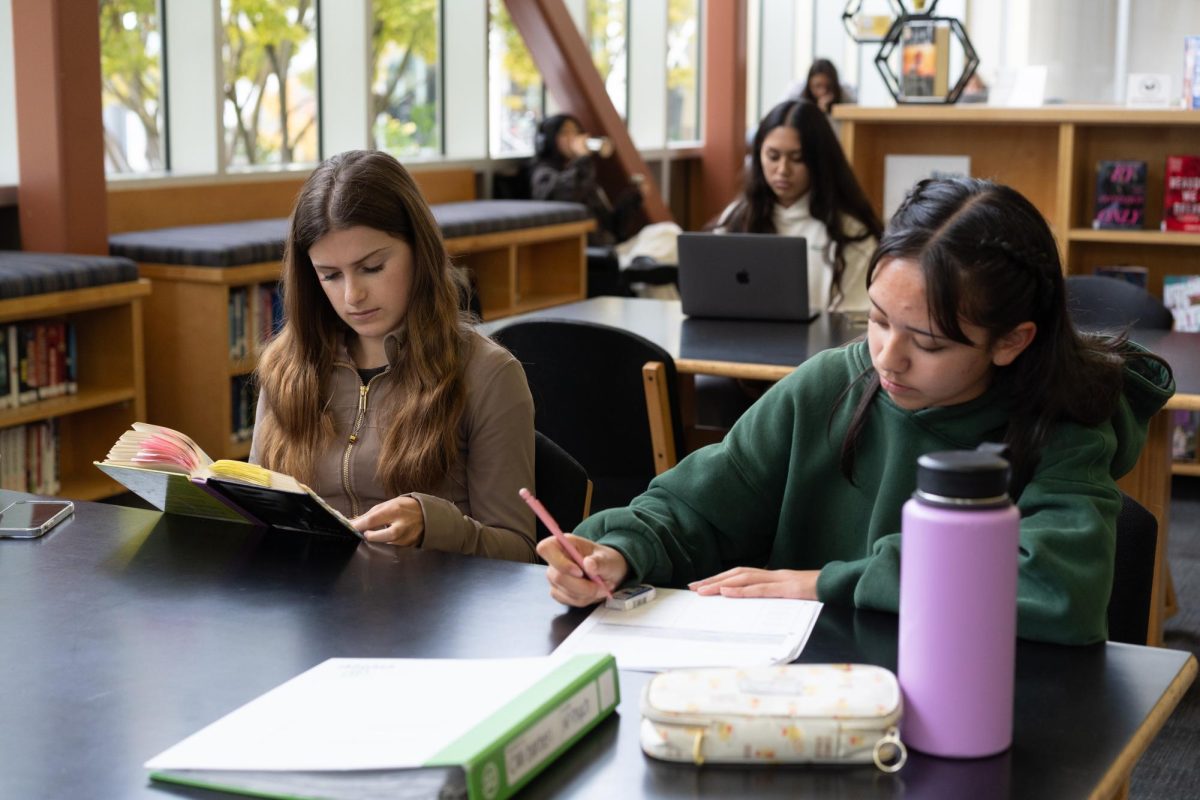


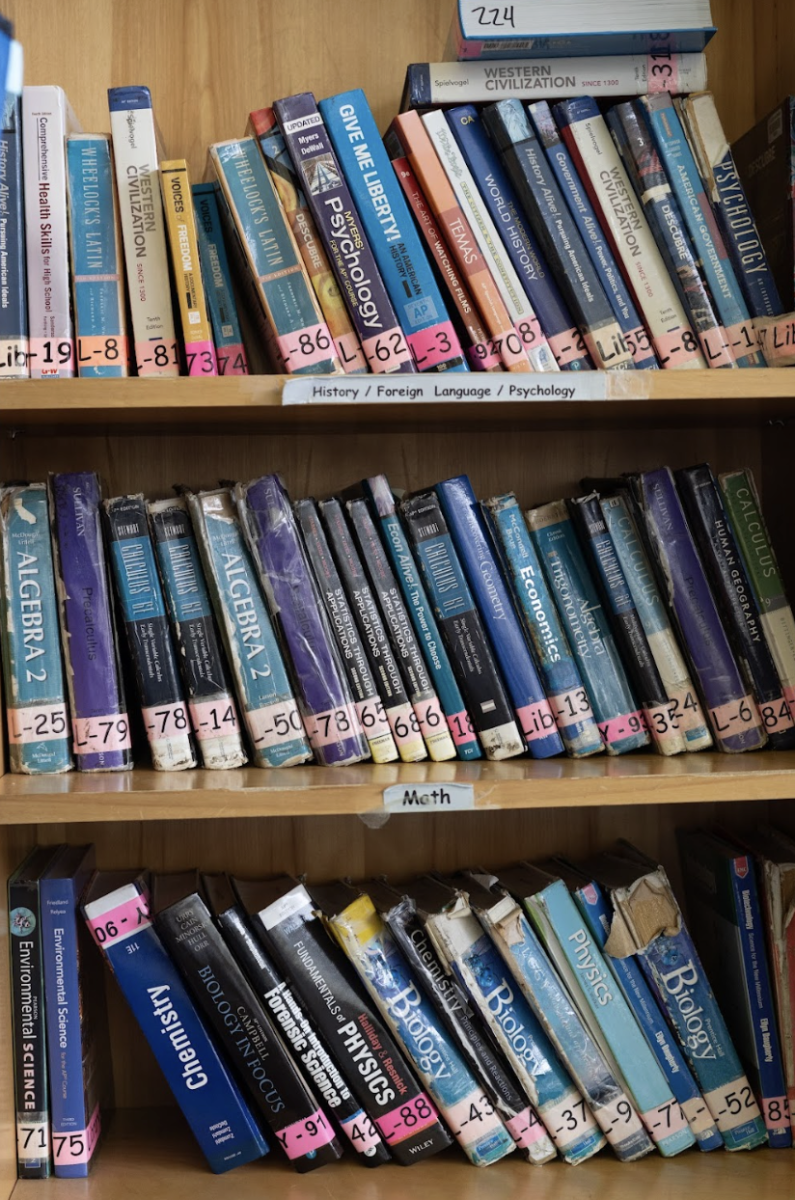
Every year, LAHS spends thousands of dollars on textbooks. And then? Most students never even open them.
More than half of students who return textbooks admit they didn’t crack the spine once, according to textbook room staff member Lorena Rodriguez-Daniel. For some, it’s because their teachers used digital versions, they found PDFs online or they just never needed them.
There’s no way around it, though, as state law requires the school to check them out, regardless of other existing materials. The result is a system that checks legal boxes while physical books go unused.
“I’ve seen students come in with ripped backpacks because they’re carrying seven books, and then they tell me they only used one,” Rodriguez-Daniel said.
The textbook room operates on two carefully managed systems — Aeries and ASBWorks — where they log inventory, check-ins and outs, damages, charges and orders.
When shortages occur, teachers rely on their own class set as a last resort. But the real problem isn’t missing textbooks, it’s that students aren’t using the ones they have. When the school does run out, the first question Rodriguez-Daniel hears isn’t “when will you restock?” It’s “Is there an eBook?”
“I haven’t used a physical textbook all year,” senior Milo Levin said. “Everything I need is online.”
Sophomore Ana Asmar puts it more bluntly.
“It’s 2025 — no one’s reading books anymore,” Ana said. “The physical copies of textbooks are just impractical.”
But here’s the complication: California’s Williams Act requires schools to provide textbooks to students. Even if students aren’t using them, the district can’t stop ordering them.
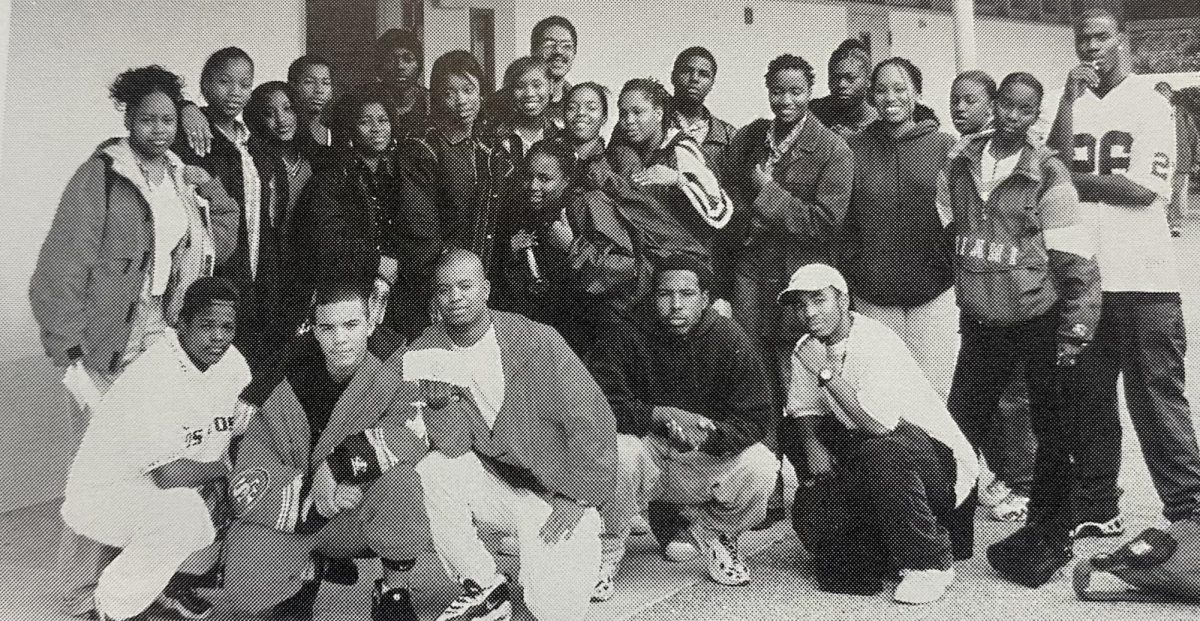
The Williams Act stems from a 2000 lawsuit about equitable education. When a San Francisco middle school teacher asked his class what problems they faced at school, his students were quick to raise concerns about the school’s textbook shortage, among other qualms about deteriorating facilities.
This became the grounds for Williams v. California, which aimed to address inequitable conditions across state schools, particularly those affecting marginalized students in large urban districts. California Education Code 60119 now requires districts to annually verify that students have access to textbooks for use both in class and at home.
The Williams Act assumed physical books would be a key step towards educational equality. But in 2025 — and after a global pandemic that forced schools online — learning is increasingly digitized. Students search for PDFs, teachers scan pages and physical textbooks gather dust at home.
Nevertheless, the law still requires California schools to provide students with textbooks. So the District keeps ordering, LAHS keeps distributing and students keep shelving them — a cycle that serves the letter of the law, but misses its spirit entirely.