

When an 18-wheeler rumbled down Almond Avenue in the fall of 2002, it was hauling a Broadway set from Las Vegas to Los Altos High School’s newly opened Eagle Theater. The truck, carrying props and backdrops from “Peter Pan,” clipped a power line and threw the entire block into a power outage.
Former Broken Box adviser Nancy Moran said it was, in retrospect, a fittingly dramatic illustration of their theater program: Broken Box. To be a part of Broken Box was to be “figuring stuff out along the way.”
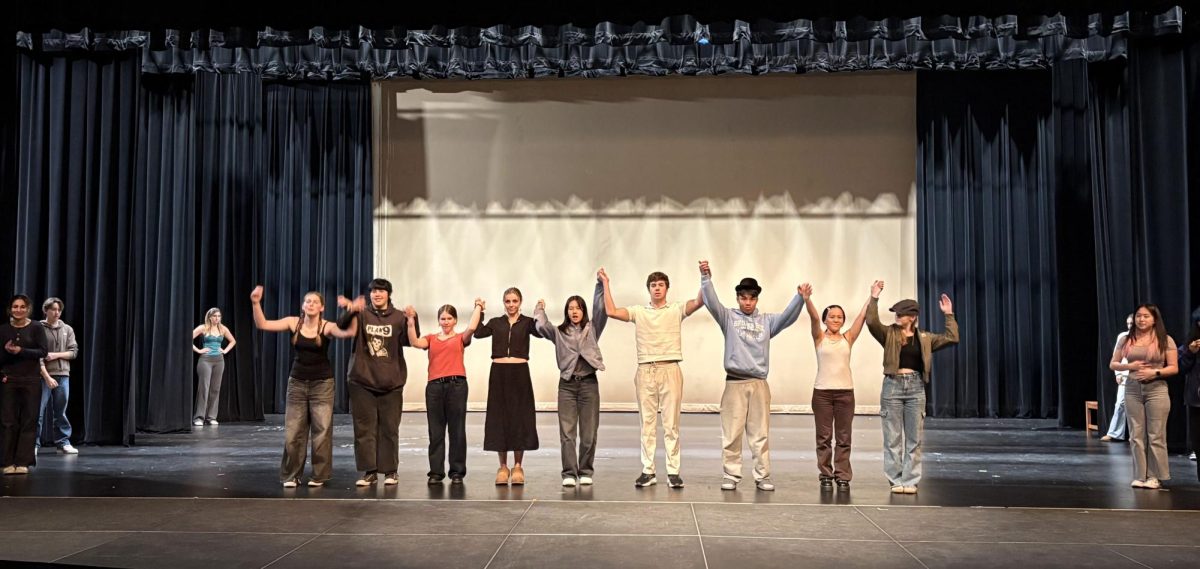
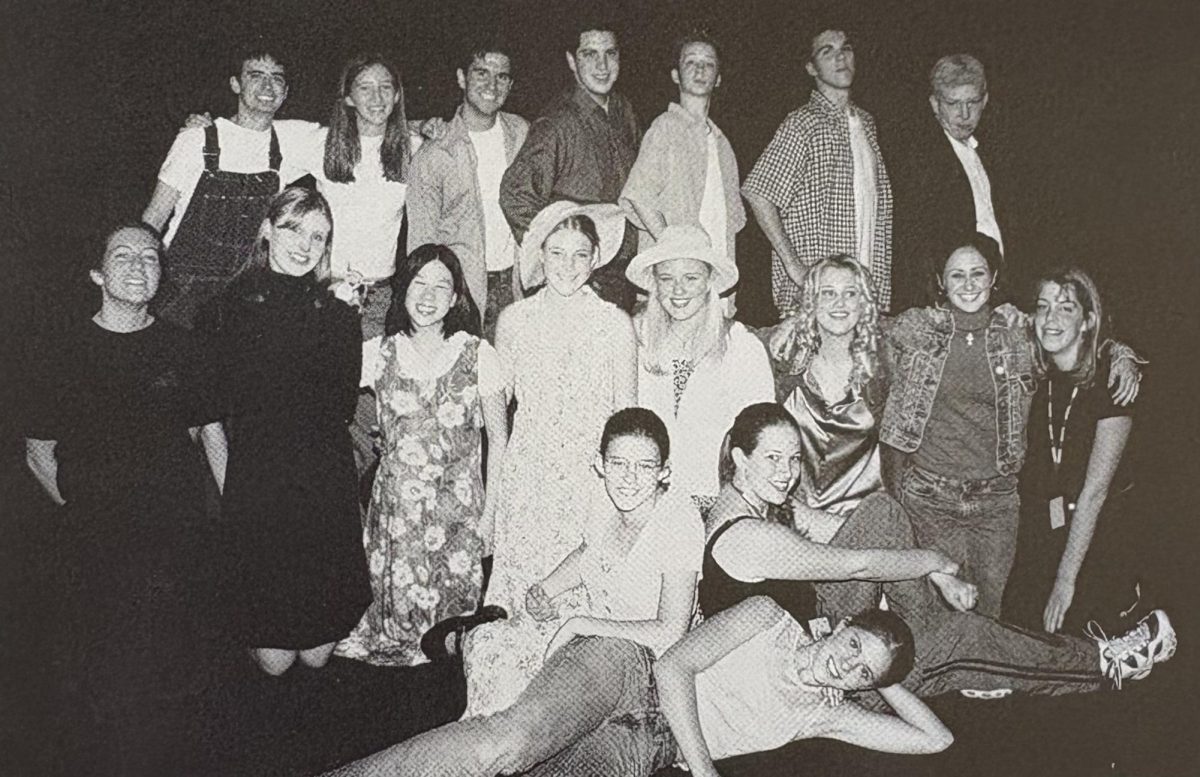
While the acting department has been a part of LAHS for as long as the school itself, Broken Box, LAHS’s student-run theater program of Acting II students, has operated out of Room 410 for 30 years. While it now involves more than 30 student-actors and technicians who put on three shows every school year, that wasn’t always the case. Before the 1990s, former acting and English teacher Alden Peterson focused mostly on in-class assignments in both Acting I and II. LAHS would put on a couple of shows every year, which all students could audition for.
During the 1992–93 school year, former acting teacher Sarah Mayper turned the program around. Under Mayper, the program’s focus shifted toward being student-run. The teacher acted more as a guide than a director. Eventually, Mayper and her students sat down and put a name to what they were doing.
“They were looking for something outside the box,” said Moran, who inherited the program from Mayper in 1998.
So “Broken Box” was born.
When Moran took over, the program was “a little meandering.” Students had a lot of say — which was good, Moran noted — but not always the ability to execute.
Moran continued guiding the students through productions, but also reprogrammed the class by introducing a new aspect of theater: a business-forward system. Students weren’t simply just acting on stage anymore. They also learned to budget, market and manage their program. The profit from one show helped fund the next, which motivated students to execute each show well. Moran required full participation and guided students with a more formalized structure than the program had before.
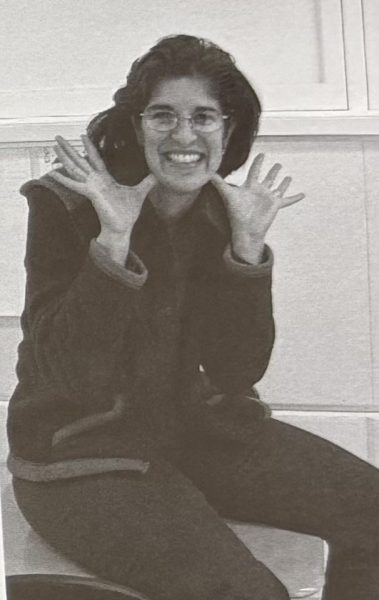
“If you’re going to market it that way — doubting the show — then it’s not going to be good,” Moran said. “You’re not going to make money. And then we’re not going to get to do another show. We were running a business.”
With Moran, the program settled into putting on three shows a year. From Shakespeare’s “The Tempest” to “High School Musical,” students mainly chose their shows, though Moran could suggest or veto ideas.
But they were just getting started. For the first several years of Moran’s tenure, Broken Box had no theater at all. Instead, productions were held in LAHS’s old cafeteria, which had a small stage and a kitchen right behind it. There, they staged more than 25 shows there including “Alice in Wonderland,” “Summer and Smoke” and “The Matchmaker.”
In 2000, Broken Box started performing in 410, its classroom. When it was time for a show, the desks were pushed out, the audience filled the room and the connecting door to room 409 became the backstage. Curtains divided the room in half, and “stage” lights were built into the ceiling.
Even with venue limitations, Moran and her students kept the fire of theater lit.
“Some of the best shows we did were in that big 410,” said Moran.
Throughout this time, the class would also rent out the black box theater at the Mountain View Center for Performing Arts, where they staged “The Wind in the Willows,” “The Children’s Hour” and more.
The Eagle Theater opened in 2002, and with it came a big shift to their program. The chaos of 410 was replaced by a professional venue with a fly system, lighting board and full-size stage.
Moran, who had previously only been familiar with directing and acting, had to learn and educate students on technical work that went into theater. The sound, lighting, set design and fly systems were all novel to her, inspiring her to bring in theater advisors and mentors for assistance. She connected with universities, fellow drama teachers and parents to learn more.
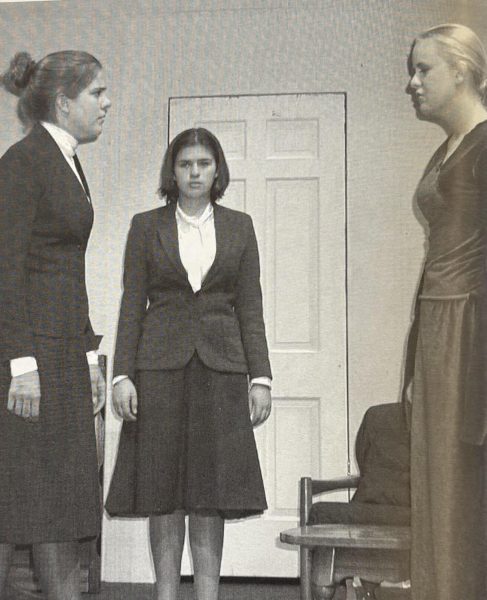
For the first five years of Moran’s time, everyone did everything. Actors were also set designers and directors, and nobody had a fixed role. Then, with the arrival of the Eagle Theater, the class split into an acting troupe and a technology crew.
For Imran J. Khan ‘03, a professional filmmaker who was in Broken Box during the 2002-03 school year, the class’s structure was most impactful, from Moran’s “business” model to the theater’s technologies.
“Broken Box was the first formal creative education that I had and gave me a window into what a creative life could be like, which stuck with me into adulthood,” Khan said.
Khan said that the technicality and rigor helped Broken Box feel less like a typical high school class and more like a functioning theater company.
“I thought it was a normal thing that every high school had a theater group like Broken Box,” Khan said. “When I went to college, I realized it’s actually very uncommon to have an almost-professional theater company as part of your high school.”
Khan said he carried memories and lessons from Broken Box into college, specifically in the South Asian culture show. He said Broken Box taught him practical skills that he used with future collaborators, including comedian Hasan Manaj.
“I felt like I was teaching [my collaborators] all the stuff I learned from Broken Box: it’s bad to turn your back on the audience, this is how you block a live scene, this is how you speak in a theater setting,” Khan said.
Beyond technical skills, Broken Box also taught actors to take risks.
“As I was asking my students to take more chances, I started taking more chances too,” Moran said.
Moran realized that theater was a tool — and she started using it as such. In its 2004–05 season, Broken Box staged “The Laramie Project,” a then-controversial play based on the murder of Matthew Shepard, a gay college student beaten and left to die in 1998. Before opening night, the school received letters warning them of protestors of the show, but they still went forward with the production.
The show was successful and significant — so much so that they did it again a decade later.
“Ms. Satterwhite used to joke, ‘I would love it if you could just do shows that were like rainbows and butterflies,’” Moran said. “We both knew that was not going to happen.”
“The Laramie Project” wasn’t Broken Box’s only controversial production. Moran gravitated toward material that engaged with a cause, from community and belonging to suicide. Cast members would even visit English classrooms to read excerpts of the shows and talk about their themes.
“Moran always went for a message,” Battle said. “She was always trying to shed light on what theater could be.”
For students like Khan, the program also impacted their social lives, creating a community to which he felt connected.
“I found people who had similar interests and were all strange in different ways,” Khan said. “There’s this camaraderie and bonding that happens in theater because of the rigor of what you have to go through together.”
Broken Box also helped Khan discover more about himself. He said being a Lost Boy in “Peter Pan” helped him become more comfortable with comedy and performance. Before that, he considered himself introverted, but the stage gave him a way to take risks.
“I could bring out a part of myself that in regular life would be considered strange, but on stage, it’s entertaining,” Khan said.
After 24 years of advising Broken Box, Moran retired in 2022, handing the baton to current adviser Lisa Battle, a former Broken Box student and English teacher. For Moran, it was a “perfect” outcome.
While Moran brought in outside professionals and staged large- scale, technically ambitious productions, Battle has adapted Broken Box to give a more efficient workload, giving students more room to take ownership. Students now have full reign over choosing to choose their shows.
Walking into Room 410 today, the wall is still stained from the earliest generations of Broken Box, by Moran’s legacy: the paint Battle splashed while working on the set for the production of “Romeo and Juliet” is a permanent fixture. In fact, most of the room has not changed throughout the years.
“Room 410 was my home,” Battle said. “I feel my most authentic self when I come in here. This room is the place I associate with feeling worthy, loved and accepted. I really hope that it is like that for my students, too.”
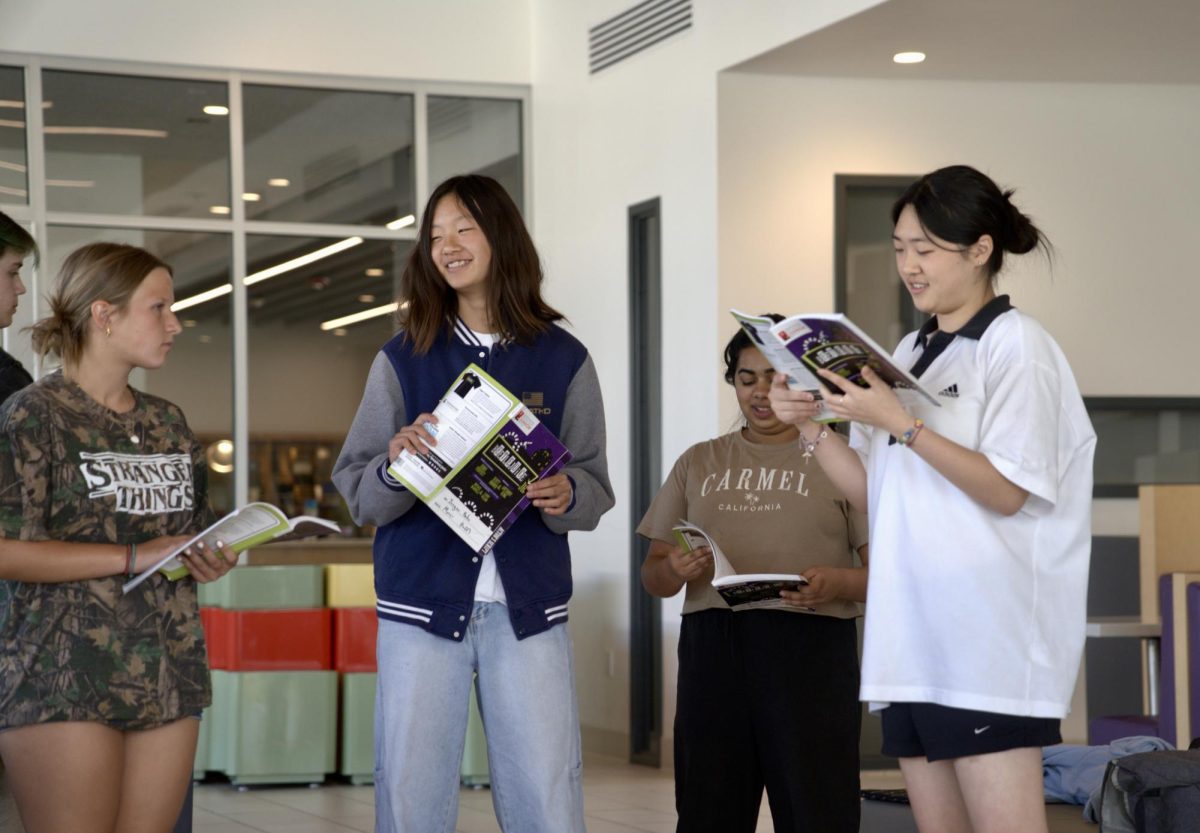
Battle pointed to the students sitting in Room 410 during ACT, laughing together.
“It really has the potential to change the trajectory of your life,” Khan said. “I’m a product of that.”