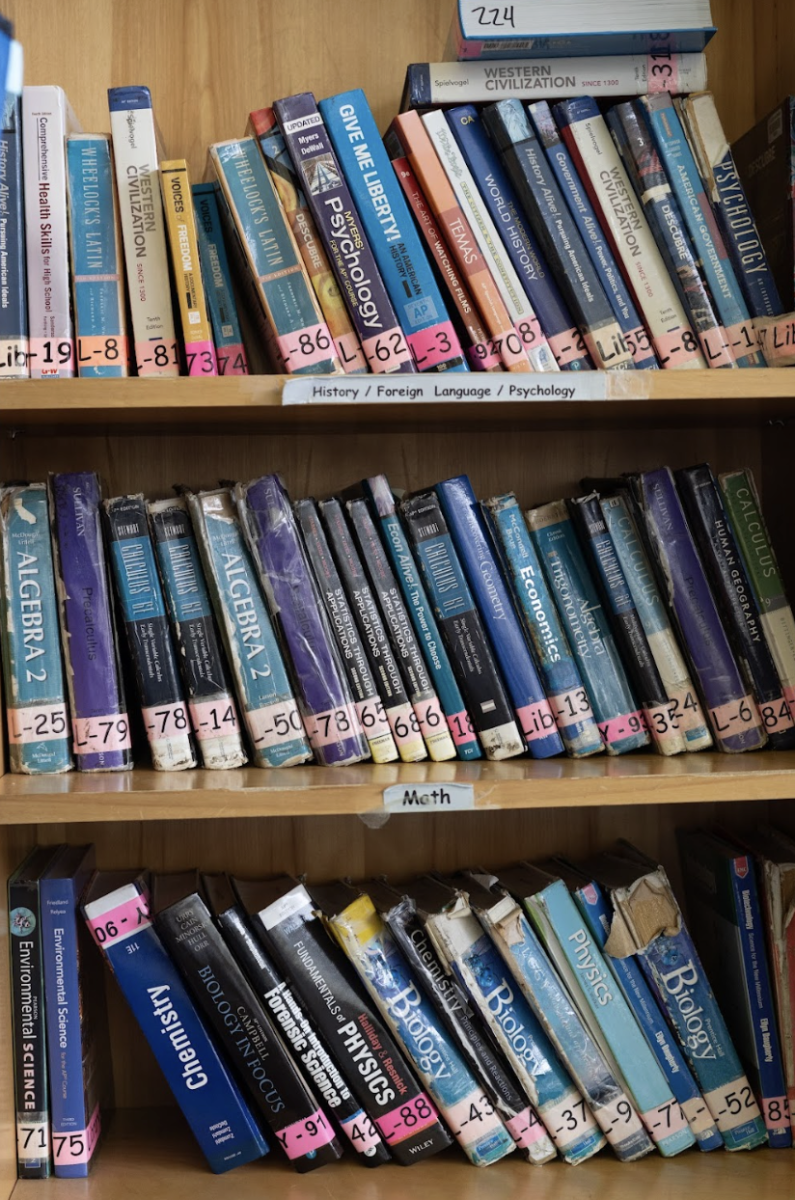

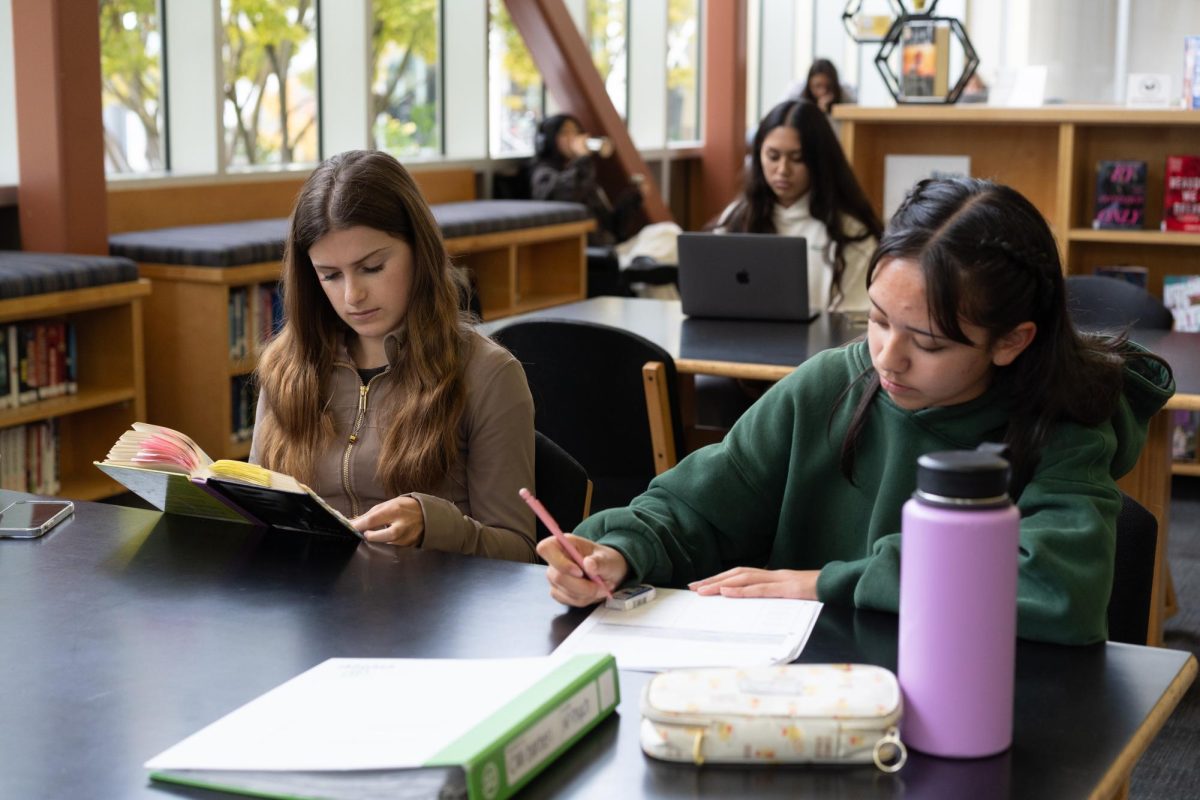
Los Altos High School’s library is a campus cornerstone, serving as a quiet place for students to read, work and unwind. But beyond its peaceful surface is the constant effort to maintain, update and shape the space.
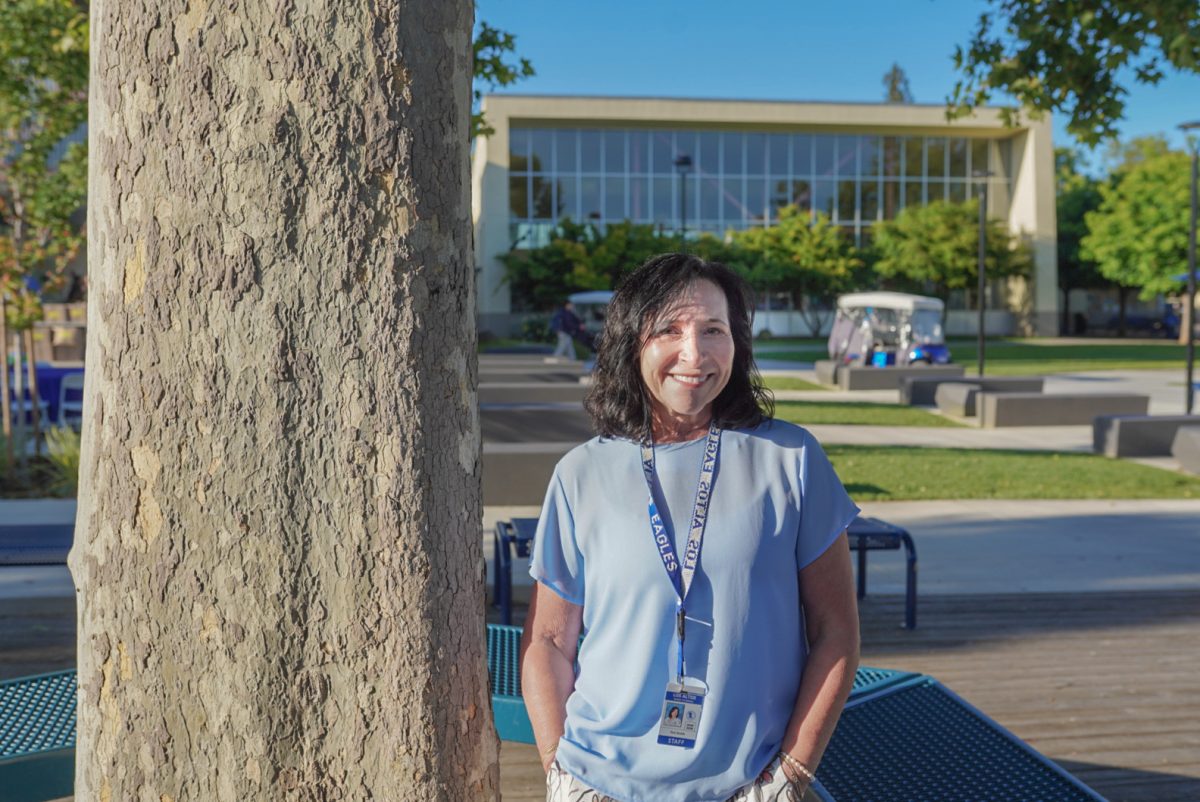
The LAHS library is powered by continuous maintenance from librarians Gordon Jack and Christina Tovrea.
Tovrea focuses on the student-facing side of operations, checking students in, providing supplies and assisting them in finding books. Behind the scenes, she catalogs new books upon shipment to the library — going through a 10-step process for every one that hits the shelves.
Among other roles, Jack researches books to add to their collection. He regularly considers review sites, new releases, personal favorites and trends in student interest.
Student requests play a major role in shaping the library’s collection — according to Jack, interests in genres including mystery, manga and horror have doubled or even tripled their collection in those areas in recent years.
“We’re always looking at our collection to make sure that it’s current,” Jack said. “Our mindset is asking, ‘Would a student want to read this on their own?’”
Beyond requests, books are also added into the library through subscriptions. The Junior Library Guild, a company that curates and sends books to high school libraries, regularly sends the LAHS library collections to add to its shelves.
Despite the library’s careful curation of books, not all of them end up being a hit. Books that haven’t been checked out in five years are removed from shelves to make space for new reads. Those in good condition are donated to the Los Altos Public Library.
As of this school year, the library has 6,994 unique titles in its collection, spanning 4,298 authors. Besides physical books, they also offer 113,723 eBooks, free printing, a recording booth, video equipment for loan and computer and phone chargers to borrow.
Banned Books
Despite the prevalence of book bans across the country, the LAHS library has never banned a book. In fact, it houses many books banned in other states, such as “Gender Queer” and “The Hate U Give.”
California Assembly Bill 1078, passed in 2023, prevents school boards from banning books based on inclusion of diverse perspectives and requires school materials to accurately represent societal diversity in terms of gender, race, religion and socioeconomic status.
Beyond California, however, book bans persist. PEN America reported 6,870 instances of book bans in 87 public school districts across the country in the 2024–25 school year. The majority of books banned included sexual, racial or LGBTQ+ content.
Though the LAHS library isn’t subject to any such bans, Jack still acknowledges that some books aren’t appropriate for a high school library.
“I have to consider my community’s wants and needs,” Jack said. “Sometimes what one person wants might be offensive to another person in the community, but I want to honor their wishes.”
Library Diversity Audit
In the library, diversity in book selection and authors is equally important. The more vast perspectives are, the more readers can explore and understand ideas and experiences.
“Books can be both windows and mirrors,” Jack said. “As a mirror, books reflect your own experiences. As a window, books allow you to get a peek into other people’s experiences.”
In the past few years, Jack said the LAHS library has made a conscious effort to include more works by authors in underrepresented communities.
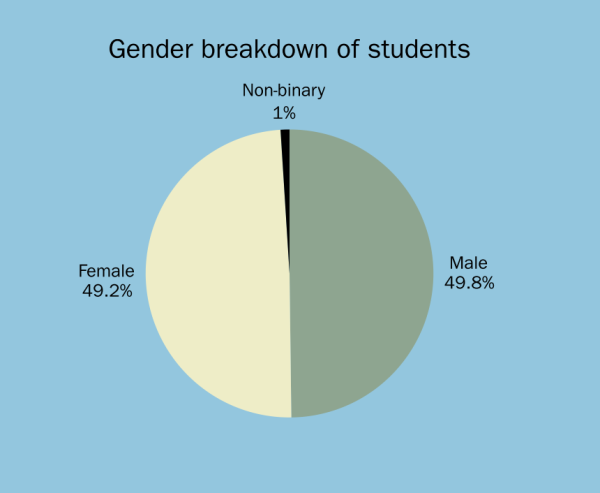
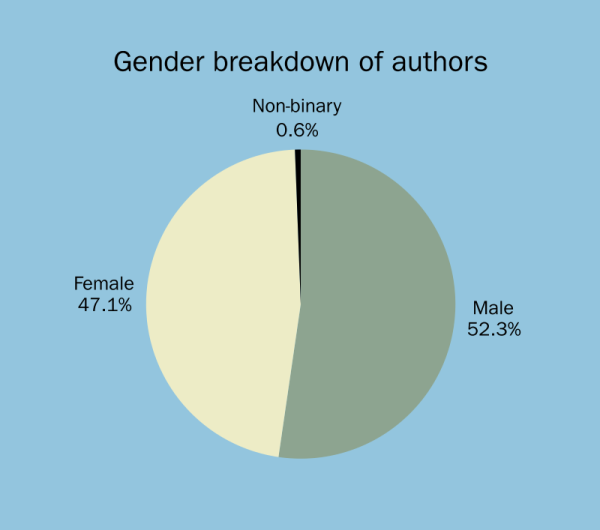
Below is a breakdown of the demographics of authors in the LAHS library and the corresponding demographics for LAHS students. For gender and nationality statistics, Talon staff audited all 4,298 authors in the library. For race statistics, Talon staff audited a random sample of 360 authors.
Gender:
Top 10 Nationalities (in order): American, British, Canadian, Japanese, German, French, Australian, Irish, Mexican, Spanish
Race:
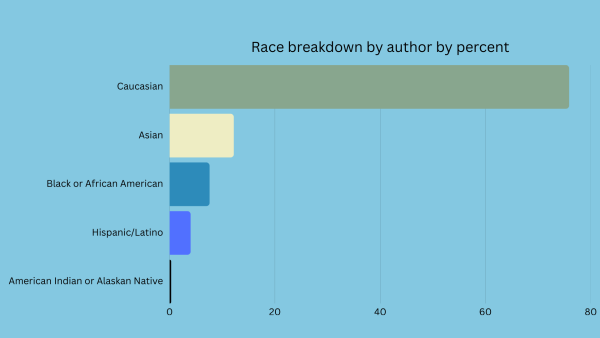 Compared to demographic data on LAHS’s student population, the data for authors differs significantly. Notably, the proportion of Caucasian authors is twice that of Caucasian students, while the proportion of Asian and Hispanic/Latino authors represents only about one-third and one-seventh of their proportions in the student population, respectively.
This lack of representation isn’t entirely an issue of the LAHS library itself. According to a 2024 New York Times article, 72% of the American book industry is Caucasian, aligning with the library’s statistics.
“I find the stats unsurprising given the historical prioritization of white male authors,” English teacher Jasmine Mark said. “It says a lot more about the publishing world than it does about our library.”
Some students found the discrepancies between the student population and the authors concerning.
“It’s a big problem that there isn’t as much diversity because we don’t get many different viewpoints,” junior Edmundo de la Fuente Garcia said.
Others aren’t so bothered about the lack of equal representation.
“Even as someone with a Hispanic background, a lack of diversity still doesn’t really impact me directly,” junior Pamela Zavala said. “As long as there is content written about different backgrounds, then I don’t think where it comes from matters as much.”
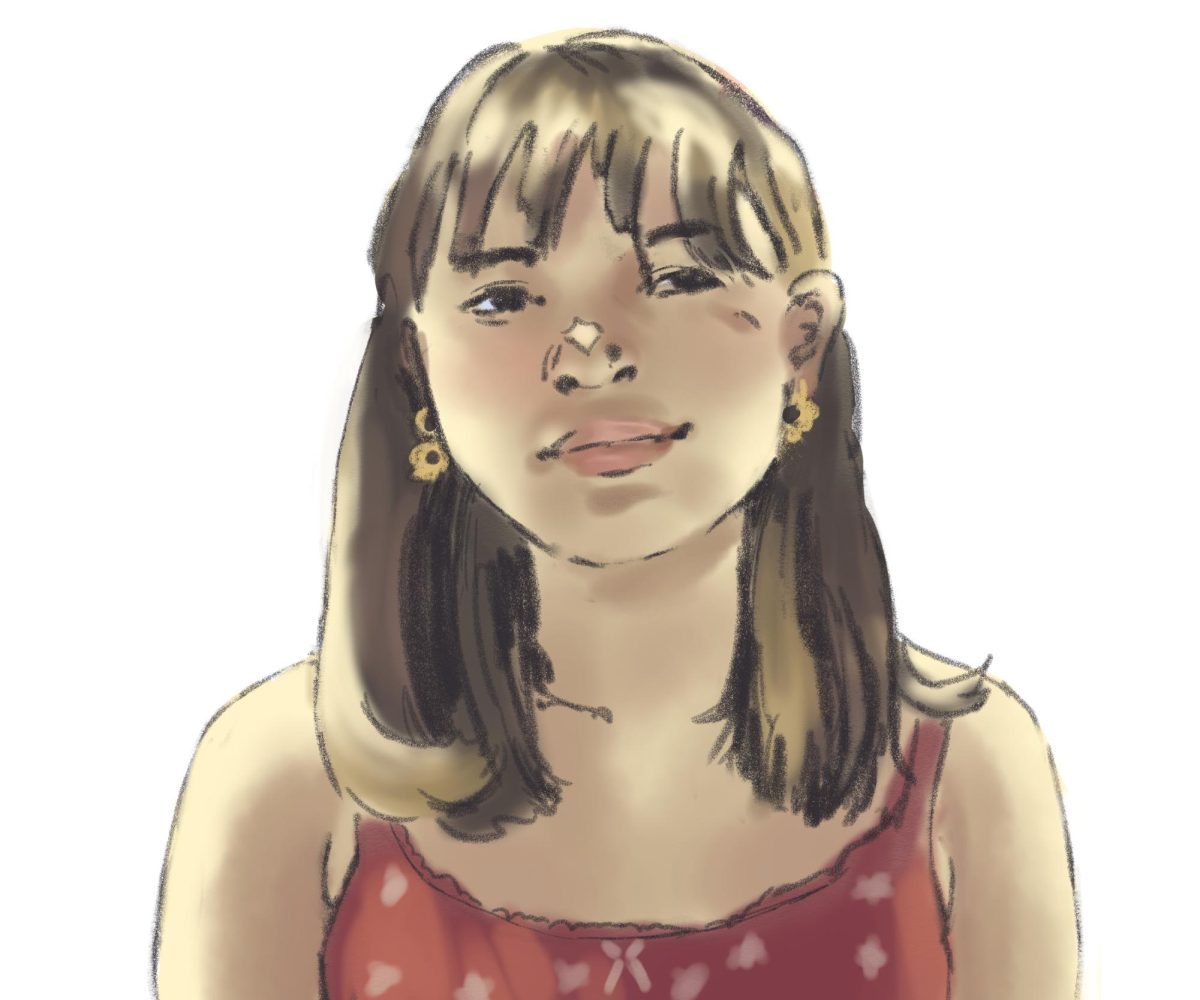
“We have such a diverse range of students here that diversity in the library isn’t as necessary,” senior Anika Vittal said.
Beyond race, gender diversity of authors much more accurately reflects LAHS’s student body.
“I’m surprised that 0.6% of authors are non-binary,” sophomore Tilly Burgart said. “Our school’s library probably does a lot better with gender than most places.”
Ultimately, Jack said that he believes addressing diversity in the library is an ongoing effort — and one of utmost importance.
“When you look at every section in the library through a critical lens, you start to see where your holes are — where you need greater representation,” Jack said. “But I think wanting to see their own experience reflected in a book is what drives a student to pick it up.”