

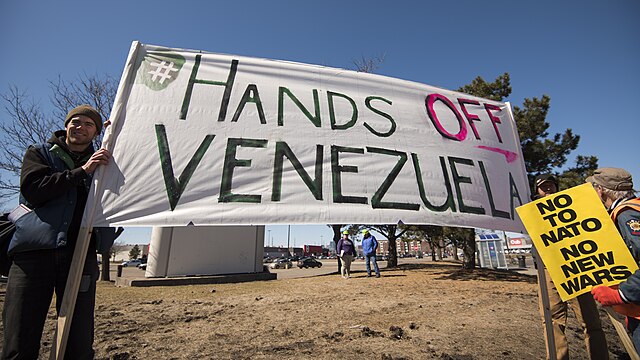
For decades, the U.S. and Venezuela maintained a relationship built largely on Venezuela’s oil reserves. Recently, that relationship collapsed into one of the most hostile conflicts in the Americas, shaped by political ideological clashes and economic sanctions. Recent U.S. actions including new sanctions, patrolling Venezuelan waters and the capture of Former President Nicholas Maduro reflect the culmination of several actions and decisions rather than a sudden downturn.
A Relationship Built on Oil, Broken by Politics
For much of the 20th century, U.S oil companies invested heavily in Venezuela’s petroleum industry, as its products became a staple in American energy imports. The investment was driven by Venezuela’s world’s largest proven oil reserves. However, the relationship changed after former Venezuelan President Hugo Chavez took power in 1999.
Chavez embraced socialism, openly challenging U.S. influence in Latin America. His government framed the U.S. as an imperial power, obtaining support from alliances with Cuba, Russia and Iran. While oil exports to the U.S continued, political relations steadily declined.
After Chavez’s death in 2013, then-Executive Vice President Maduro inherited the presidency. Under his management, Venezuela’s economy collapsed, corruption rose and oil production fell consistently. Hyperinflation and power outages forced millions to flee, creating one of the world’s largest migration crises.
The U.S. responded with sanctions on major industries, including the oil sector. The U.S. said the measures were meant to pressure Maduro to restore democratic systems, but Venezuela responded saying the sanctions worsened humanitarian suffering. The U.S. began imposing sanctions in 2015 under Former President Barack Obama. They were then extended by President Donald Trump during his first term, and increased during his second.
Last year, before Maduro’s capture, tensions escalated when U.S. naval forces increased patrols in the Caribbean to monitor narcotic operations. American and allied ships intercepted several vessels suspected of smuggling cocaine in Venezuelan waters, many tied to Venezuelan officials. The Trump administration argued that Venezuela not cooperating showed it was acting as a haven for criminal networks.
Ultimately, this escalation ended in a U.S. operation that resulted in Maduro’s capture and transfer to the Brooklyn Metropolitan Detention Center, where he is jailed with other prominent figures such as Sean “Diddy” Combs, United Health CEO shooter Luigi Mangioni and rapper Tekashi 6ix9ine.
In the United States, reactions to the capture split sharply between the two parties. Trump allies and some Republicans defended the operation as a necessary security crack down while many Democrats condemned it as an unlawful use of force. Internationally, several governments including Brazil, Mexico, Columbia, Spain and Russia issued statements criticizing the operation while governments such as Paraguay, El Salvador, Argentina and Guyana supported it.
Responses and Implications for both countries
For Venezuela, years of sanctions, political instability and economic collapse left lasting damage, including obstacles to rebuilding the economy and oil sector. A new pressure point for Venezuela is their offshore enforcement. U.S. authorities said they have seized multiple oil tankers in the Caribbean and North Atlantic linked to sanctioned Venezuelan trade.
Venezuelans are split about the situation. Many see Maduro’s removal as a chance for a reset and a step away from socialism. Others fear instability and major retaliation by loyalists and transition that may collapse if elections are delayed or lack credibility.
For the U.S., the conflict marks a shift from using diplomacy and sanctions to direct enforcement on international issues. Supporters said it cuts off corruption and trafficking, strengthening national security, while critics argued that it is illegal and risks political instability.
But U.S.-Venezuela relations did not collapse overnight. Rather, years of ideological conflict, sanctions and economic collapse turned the once-diplomatic relationship into a geopolitical conflict. As both countries move forward, the challenge remains whether stability and cooperation can be restored after years of confrontation.