

Lukiana Cherkashina – Syrniki (Cottage Cheese Pancakes)
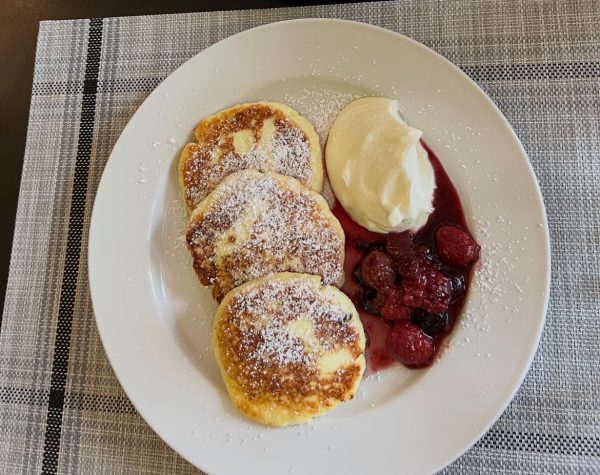
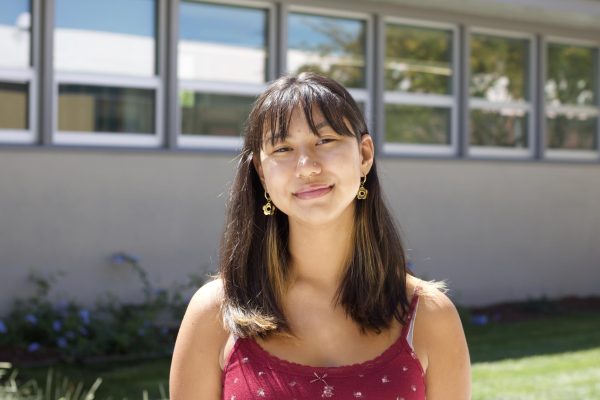
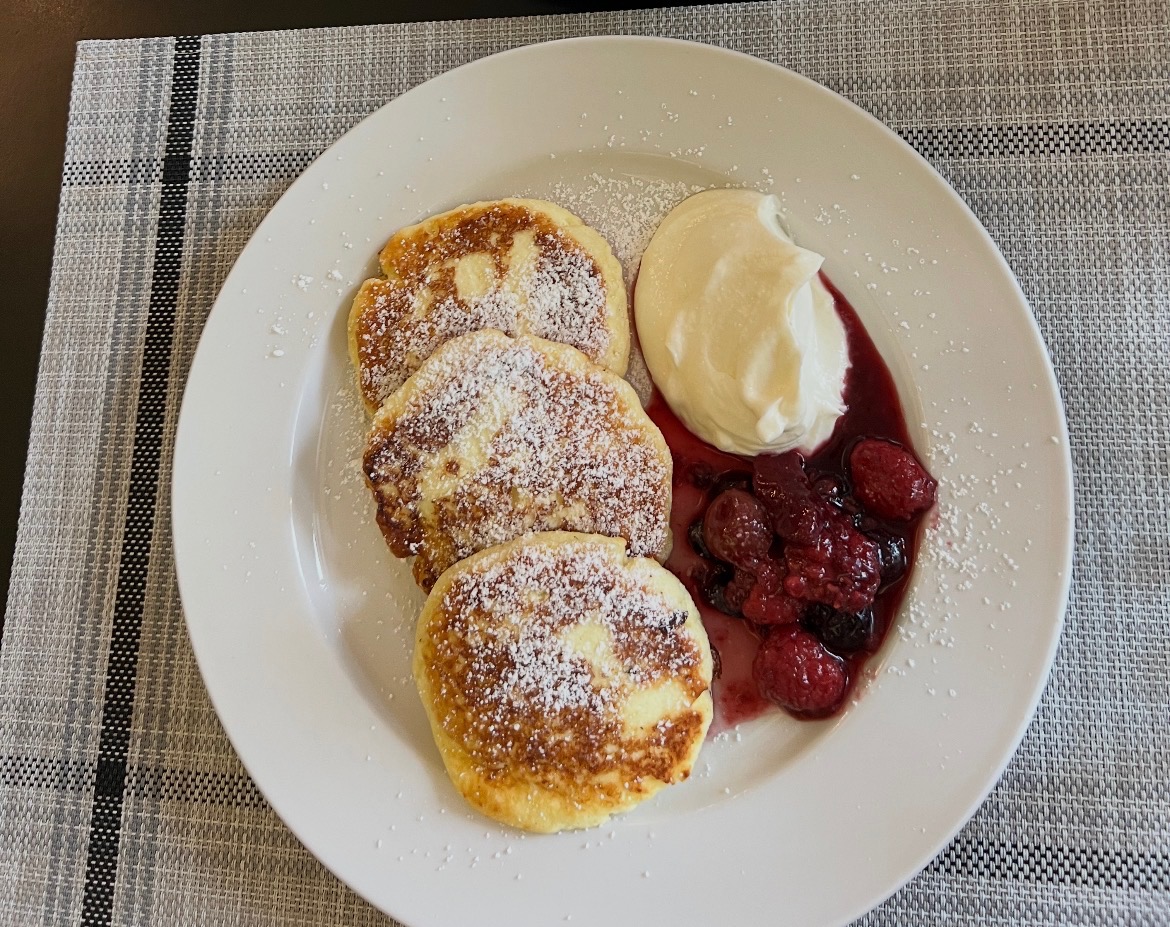
When junior Lukiana Cherkashina thinks of her childhood in Russia, a breakfast table piled with syrniki — slavic pancakes made with cottage cheese — comes to mind first.
Lukiana’s family emigrated from Moscow, Russia, more than a decade ago, but they still continue a beloved tradition: syrniki for breakfast.
She said the custom was passed on from her maternal grandmother, each generation putting their own spin on the dish.
“Everyone in my family has grown up with it because it’s made of simple ingredients you can always find in a traditional Slavic house,” Lukiana said.
It’s also a taste of her childhood and home. Lukiana recalled eating miniature syrniki growing up.
“When I was really young, I enjoyed having the little leftover one,” Lukiana said. “My mom still makes small ones for me, which is something I cherish.”
Like her grandmother and mother, Lukiana hopes to pass down her culinary heritage to her children.
“My mom has so many years of experience that making syrniki is second nature to her,” Lukiana said. “I want this to be something that I share with my friends, family and kids.”
[/sidebar]
Weston Muscarella – Beef Rouladen
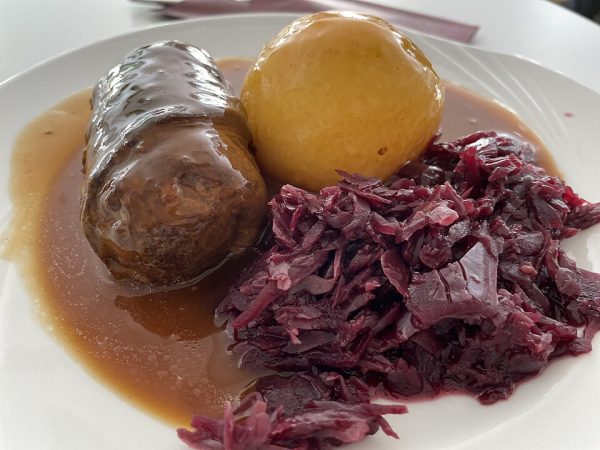
Browned beef and buttery mashed potatoes are more than a meal for senior Weston Muscarella: it marked the start of his journey as a cook. He fondly recalled sharing the kitchen with his grandmother to make her signature beef rouladen.
“It matters a lot to me,” Weston said. “I made it a lot with my grandmother when I was younger, and it was a good foundation when I first started to cook.”
Beef rouladen is a traditional German dish where thinly sliced beef is wrapped around a flavorful filling of mustard, bacon and onions. The dish requires a well-rounded chef, and with time, Weston has learned to balance its many moving parts: rolling beef with bacon and onion, browning the meat and braising it to make a gravy.
Although the labor-intensive cooking process prevents Weston from making rouladen frequently, he said the reaction from his relatives always makes the effort worthwhile.
“It’s really nice to see my family’s faces when they see the dish, because they know how good it is,” Weston said.
Svea Delingat – Aachener Printen (German gingerbread cookie)
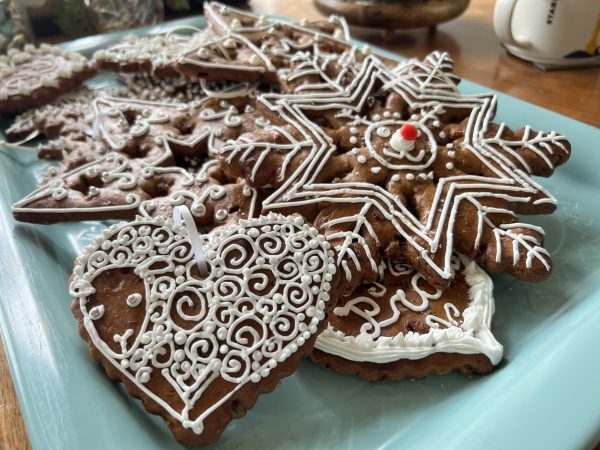
Lebkuchen — German cookies — is a Christmas staple for senior Svea Delingat.
One of Svea’s favorites is aachener printen, a traditional German gingerbread decorated with frosting. The cookie can then be hung on a Christmas tree or eaten. It’s meaningful to her family from the memories created during the making of them.
The process is lengthy: while most cookies take around an hour or two to make, lebkuchen recipes require the dough to rest for weeks or even months. According to Svea, her family sometimes starts preparing the cookies as early as September.
“Most of my memories with these cookies are making them alongside my family,” Svea Said.
The recipe for aachener printen, among other lebkuchen, has been passed down for generations in her family.
“The recipes come from my grandparents on both sides, my parents made the cookies and have now passed them down to me,” Svea said.
Rani Gavra- Honey-Sesame Challah
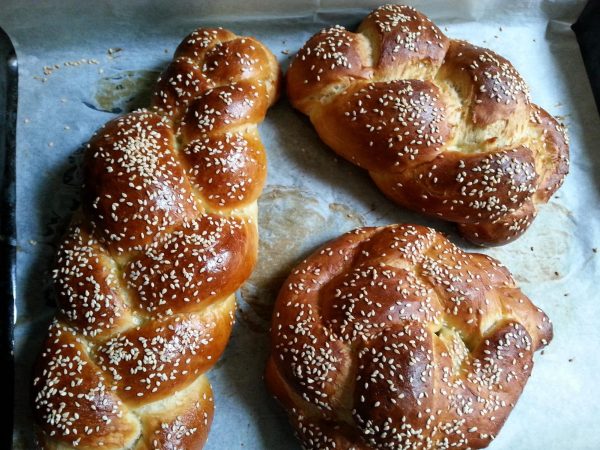
Gluten binds bread, and bread bonds junior Rani Gavra with his aunt. Specifically, it is his aunt’s honey-sesame challah — a sweet, braided loaf of bread traditionally eaten on Jewish ceremonial occasions such as Shabbat.
“I usually only make challah when my aunt comes over, which is typically during the holiday season,” Rani said. “We make a whole day out of it.”
Rani and his aunt’s tradition starts before they enter the kitchen — he says they always shop for ingredients together. While kneading, waiting for the dough to rise and baking, the duo gets to connect — they play games and watch movies.
His challah recipe combines whole wheat and white flour with honey, eggs and oil to create a soft, slightly sweet loaf. Before baking, the bread is brushed with a honey-water mixture and sprinkled with sugar, giving it its iconic golden finish.
Although Rani has made challah on his own, he says the most special memories are those with his aunt.
“I associate it with the holidays and making it together,” Rani said.
Ellie Tseng- Cong You Bing (Scallion Pancakes)
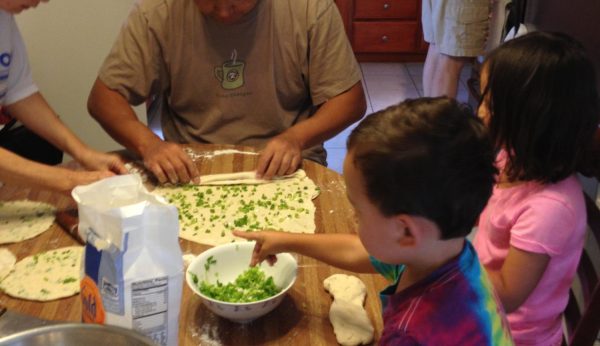
For senior Ellie Tseng, culture and community are two sides of the same scallion pancake — passed down through her Chinese paternal family, cong you bing signifies Ellie’s connection to her Chinese culture and fond childhood memories.
Yet the best recipe is none at all, Ellie said, recalling her grandparents and father teaching her the art of cong you bing-making by hand.
“Cong you bing connects me to my culture and those who made it before me,” Ellie said. “Cooking this dish is a technique that has been passed down through my family.”
Ellie’s childhood consisted of entire days carrying out the repetitive, familiar activity of making cong you bing.
“We used to go to my grandparents’ house for the day and make a lot of it,” Ellie said. “Then for dinner we would eat all of the pancakes. It’s something that we make when we wanted to spend time with each other, a collaborative effort where all of us are working together.”