

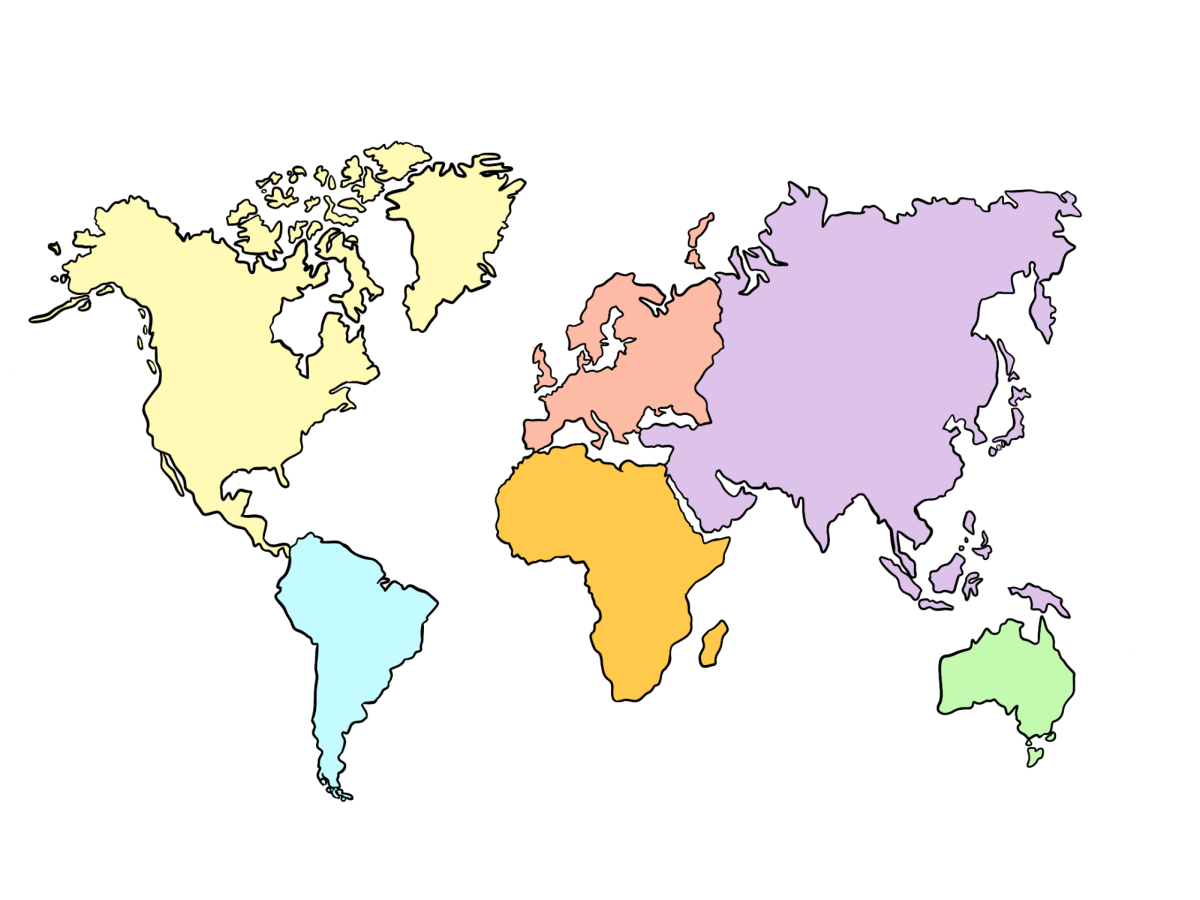
Asia
Iran-U.S.-Israel conflict
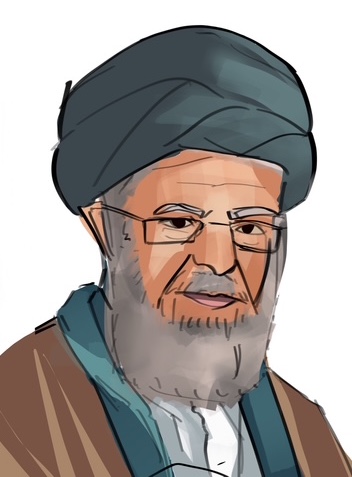
The Iran-U.S.-Israel conflict began Feb. 28, after the U.S. and Israel conducted coordinated airstrikes on Iranian nuclear facilities, military sites and senior government leadership. The strikes killed more than 70 senior Iranian military officials and damaged multiple nuclear enrichment sites.
Iran responded within three days with more than 300 missiles and drone attacks targeting Israeli cities and U.S. military installations in the Middle East, including bases in Qatar and the United Arab Emirates. The conflict also spread to Lebanon, where Hezbollah, a Shi’a Islamist political party and militant group backed by Iran, launched rockets into Northern Israel, while Israeli forces carried out retaliatory strikes along the border. More than 1,500 people were killed across the region during the first month of conflict.
Maritime tensions also increased as Iran moved to restrict traffic through the Strait of Hormuz, a route responsible for nearly a fifth of the world’s oil trade. More than 150 vessels were delayed outside the Strait, while at least 40 ships were forced to reroute to Africa. Global oil prices briefly rose to over $110 per barrel, triggering panic buying and fuel shortages in several countries.
In early April, U.S. and Iranian officials visited Pakistan to negotiate a peace deal. While no formal agreement was announced, both sides agreed to a ceasefire that largely halted direct strikes. Diplomatic tensions have continued through May as negotiations over sanctions, security in the region and Iran’s nuclear program remain unresolved.
North America
Feburary 2026: El Mencho
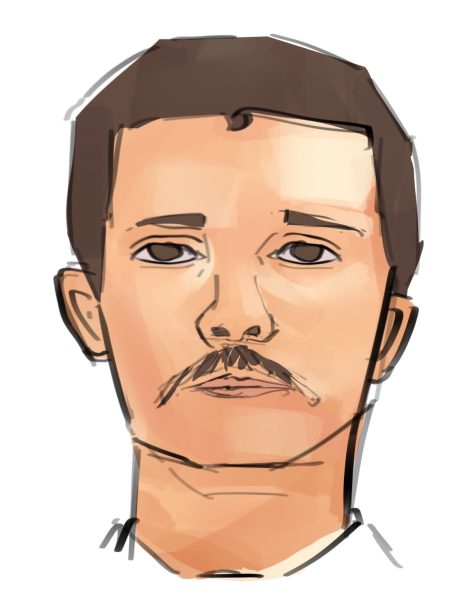
Mexican security forces killed drug cartel leader Nemesio Oseguera Cervantes, known as El Mencho, on Feb. 22 in a U.S. military operation in the state of Jalisco. The operation followed a surge in cartel-related violence across western Mexico, where the Jalisco New Generation Cartel (CJNG) had intensified attacks on security forces and civilians.
Following the operation, CJNG members carried out violent retaliatory actions across the state of Jalisco. Mexican authorities reported more than 250 road blockades across 19 states as cartel gunmen attempted to disrupt military operations, hijacking and burning vehicles and exchanging gunfire with security forces. Major highways were shut down, flights and bus routes were disrupted and some schools and businesses temporarily closed.
October-November 2025: U.S. Government Shut Down
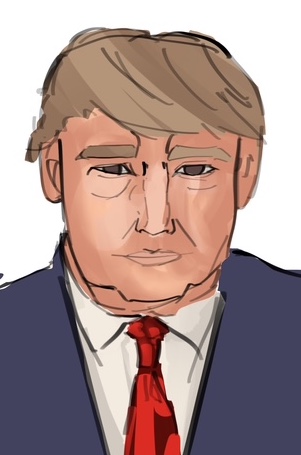
The U.S. government shut down for the first time in nearly seven years on Oct. 1, 2025, due to a standstill in Congress over a spending bill. The shutdown lasted 43 days, making it the longest in U.S. history.
Democrats in Congress pushed for an extension of enhanced Obamacare subsidies, which increased tensions between Republicans and ultimately led both parties to vote to block the other’s stopgap spending proposals. The shutdown was eventually lifted on Nov. 12, after Trump signed spending legislation to reopen the government.
September 2025: Charlie Kirk Assassinated
On Sept. 10, 2025, influencer Charlie Kirk was assassinated at an outdoor campus debate at Utah Valley University. Kirk founded Turning Point USA, a conservative youth organization based in more than 850 educational institutions across the country. The shooter was identified as Tyler Robinson, a 22-year-old from Washington, Utah.
January-June 2025: ICE shootings
Under the Trump administration, U.S. Immigration and Customs Enforcement (ICE) restarted large-scale worksite raids across the country in January 2025. In June 2025, ICE raids in Los Angeles sparked major protests, leading to vandalism, arrests and injuries to several police, protesters and journalists. Trump responded by sending 4,000 National Guard troops and 700 Marines to Los Angeles to protect federal immigration operations.
ICE expanded its operations during Operation Metro Surge, where agents raided cities in Minnesota. The operation led to three civilian deaths, including 37-year-old Renee Good and 37-year-old Alex Pretti.
Africa
Sudan RSF
Since April 2023, Sudanese Armed Forces and the paramilitary Rapid Support Forces (RSF) have fought a civil war in Sudan for control of the country after a failed transition to civilian rule. In the past year, the war shifted from the capital, Khartoum, towards western Sudan, where civilians have faced sieges, drone strikes and blocked aid routes.
Across its three years, the war has displaced around 14 million people and roughly 19.5 million people face acute hunger. In January 2025, the U.S. government classified the RSF and allied militias’ actions as genocide, saying they targeted civilians based on ethnicity, including through killings, sexual violence and attacks on people fleeing the conflict.
Despite mediation efforts by the U.S., Saudi Arabia and the African Union, no lasting ceasefire has taken hold. As of May 2026, neither side has secured control of the country, leaving Sudanese civilians trapped in one of the world’s worst humanitarian crises.
South America
January 2026: Nicolas Maduro captured
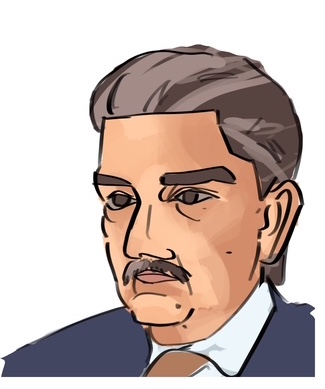
Former Venezuelan President Nicolas Maduro and his wife, Cilia Flores, were captured and arrested on Jan. 3 by the U.S. military. The U.S. mission “Operation Absolute Resolve,” which involved airstrikes on Venezuelan military targets to clear a path to its capital, Caracas, culminated in the capture. President Donald Trump said the mission was a strike against drug trafficking.
According to Venezuelan officials, more than 80 military personnel and civilians were killed. Congress was neither informed nor consulted by the Trump Administration prior to the mission, prompting backlash from U.S. lawmakers over its legality. Senator Jack Reed of Rhode Island said, “President Trump waged war on a foreign nation without authorization, without notification and without any explanation to the American people.”
Maduro and Flores were placed in the custody of the U.S. Department of Justice, facing criminal charges for alleged drug trafficking in New York. The indictment accused them of facilitating the import of illicit drugs into the U.S. in partnership with international drug cartels and members of the military since 1999. Both Maduro and Flores pleaded not guilty at their first court appearance on Jan. 5, and their case is currently in the early stages of prosecution as of May 2026.
Europe
February-March 2026: Winter Olympics and Paralympics
From Feb. 6–22, more than 2,900 athletes from 90 nations competed in the 2026 Winter Olympics, held in Milan and Cortina d’Ampezzo, Italy. The games featured 16 disciplines across 8 core sports, with 116 medal events.
Norway won 18 golds and 41 total medals — the most of any country — setting a world record for the most gold medals at a single Winter Olympics. Team USA finished second with 33 medals — 12 gold, 12 silver and 9 bronze. This marked a U.S. record for most gold medals at a single Winter Olympics.
The U.S. saw success in men’s and women’s ice hockey, with both teams defeating Canada 2–1. Notably, the men’s team’s victory marked their first win against Canada since 1980. In figure skating, Alysa Liu broke a 24-year gold drought for the U.S, returning to the Bay Area as a national icon.
In the Winter Paralympics, held from March 6-15, China won 44 medals — the most overall — while the U.S. once again finished second with 24. The U.S. also claimed gold in the Paralympic Sled Hockey tournament, making history as the first country to secure a “Triple Gold” sweep in Olympic hockey.
Sources: The New York Times, BBC, CNN, Olympics, Reuters, AP News, The U.S. Congress