

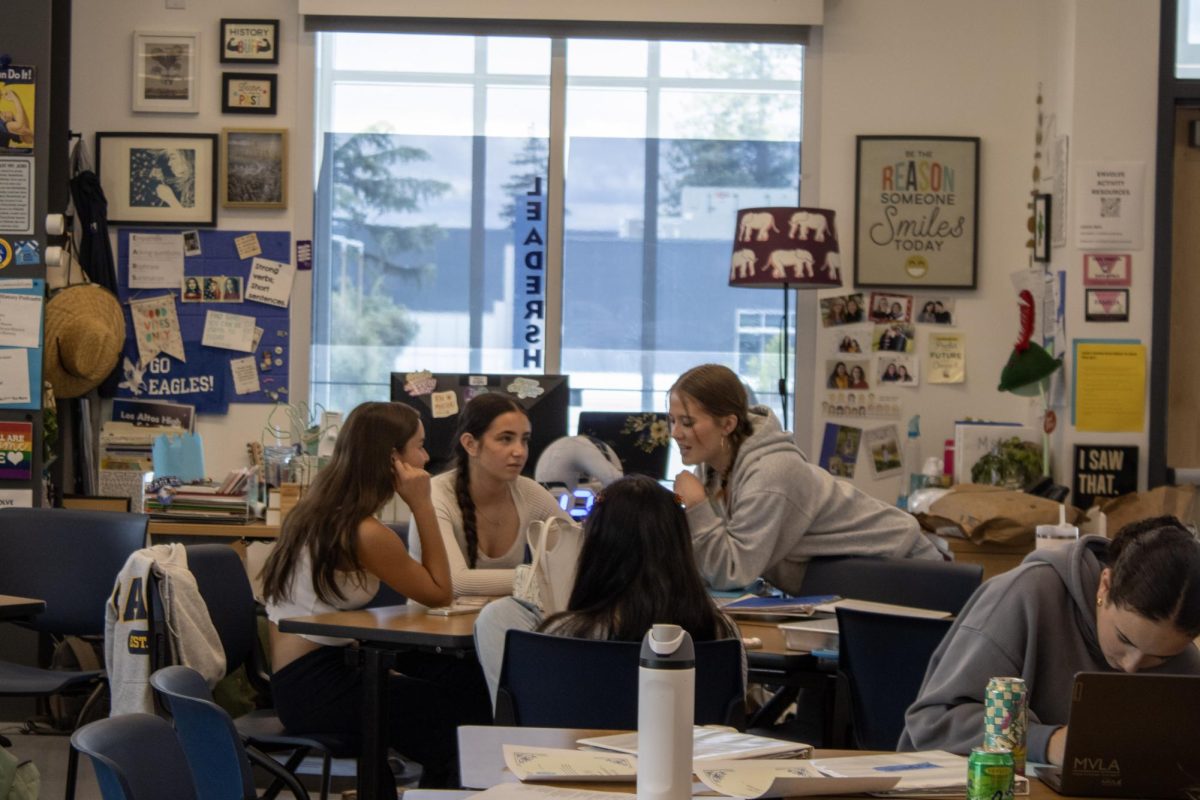
Starting this year, students interested in joining ASB and SCL classes are being selected through a lottery system. According to ASB Adviser Sarah Alvarado, the switch was intended to reduce selection bias and make the class more inclusive.
“We wanted to make ASB more equitable and transparent for everyone,” Alvarado said. “We don’t want it to be a ‘who you know’ kind of situation.”
The new system applies to both returning and new student leaders who were not elected into an ASB or SCL officer position. The names of non-officers are sorted by grade level and placed on strips of paper, which are then blindly pulled from a bowl by two adults.
As a result, some students who were in leadership classes this year were not selected to continue next year. That’s the case for freshman Gigi Samek, who was in ASB this year. In April, she learned that she was not selected to return.
“Their idea has good intent,” Gigi said. “But I want to show colleges that I’m still interested in leadership, and there aren’t really any opportunities in school for me now.”
Outgoing ASB President senior Ellie Choi expressed her concerns for the new system.
“People are upset,” Ellie said. “Returning members devote themselves to the whole leadership process, and then it looks like they quit when really they just weren’t selected.”
Beyond non-officer members not receiving return offers, class officers also aren’t guaranteed one. In the past, all class officers were automatically admitted to ASB, allowing Class Councils and ASB to directly collaborate. Now, spots are only reserved for class presidents — spots for the remaining class officers are determined by the lottery system.
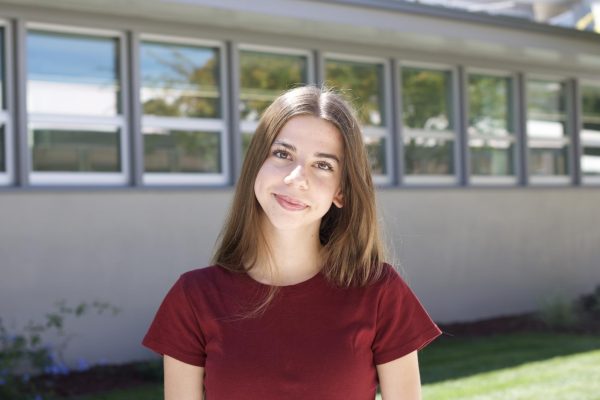
Freshman Julia Parmacek served in ASB this year and was elected to be next year’s sophomore vice president, but was denied a return spot in the class via the lottery system.
“It’s a bit disappointing that it was based on luck instead of your dedication,” Julia said.
In past years, aspiring student leaders were told to solve a hypothetical scenario in small groups, and were evaluated by Alvarado, the incoming ASB and SCL presidents and another staff member.
Alvarado ultimately decided which students would be admitted into the class.
“We were trying to find people with leadership potential who could learn from the class,” Ellie said.
According to Ellie, this system stirred up debate this year when students questioned why some returning ASB members were not accepted into the class.
“As much as we tried to make it objective before, it was still a subjective process,” Principal Tracey Runeare said.
Since the fall semester, Alvarado has collaborated closely with Assistant Principal Derek Miyahara and Runeare to switch to the lottery system, reflecting their shared goal of increasing impartiality in ASB admissions.
When contacted by The Talon, Alvarado and members of the LAHS administration said they were not able to provide data showing whether the new process has achieved its goal of increasing access to ASB and SCL classes.
ASB students said the change was announced in class in March with limited explanation.
“It was definitely a bit shocking,” Julia said. “A lot of people are really nervous.”
Changing the class’ selection system means adapting the ASB Constitution, which normally requires a two-thirds vote from ASB, followed by a school-wide vote. However, Runeare said that the voting procedures do not apply because class enrollment is decided by the LAHS administration.
“We have to come up with criteria for how we enroll students in that class that is unbiased,” Runeare said. “That is not voted on by students.”
Still, some worry about the possibility that a class composed of too many newcomers could struggle without enough returning members to help guide them.
“Having people that know what they’re doing creates a cycle,” outgoing ASB Vice President senior Vera Lin said. “They teach, and new members learn.”
Despite the apprehension, Runeare says she hopes students will view the change in a more optimistic manner.
“We knew that it might affect some students,” Runeare said. “What we hoped is that the students who were in ASB were able to recognize that they were making space for someone else, who maybe hadn’t been in ASB already, to try it.”