

This school year, Los Altos High School administration introduced Minga, an “All-in-One Campus Management Platform” designed for educators to streamline logistics. Since its introduction last August, Minga, which Principal Tracey Runeare said the school spends $11,000 a year on, has been used for attendance management, identification and announcements at LAHS.
This semester, Minga hall passes were implemented, requiring students to sign out on a classroom Chromebook using their student ID number. However, as some teachers haven’t yet implemented hall passes in their classroom, students are engaging with the platform at different levels. As a result, The Talon seeks to answer the question: Are there net benefits of using Minga, especially if not all teachers are adopting it?
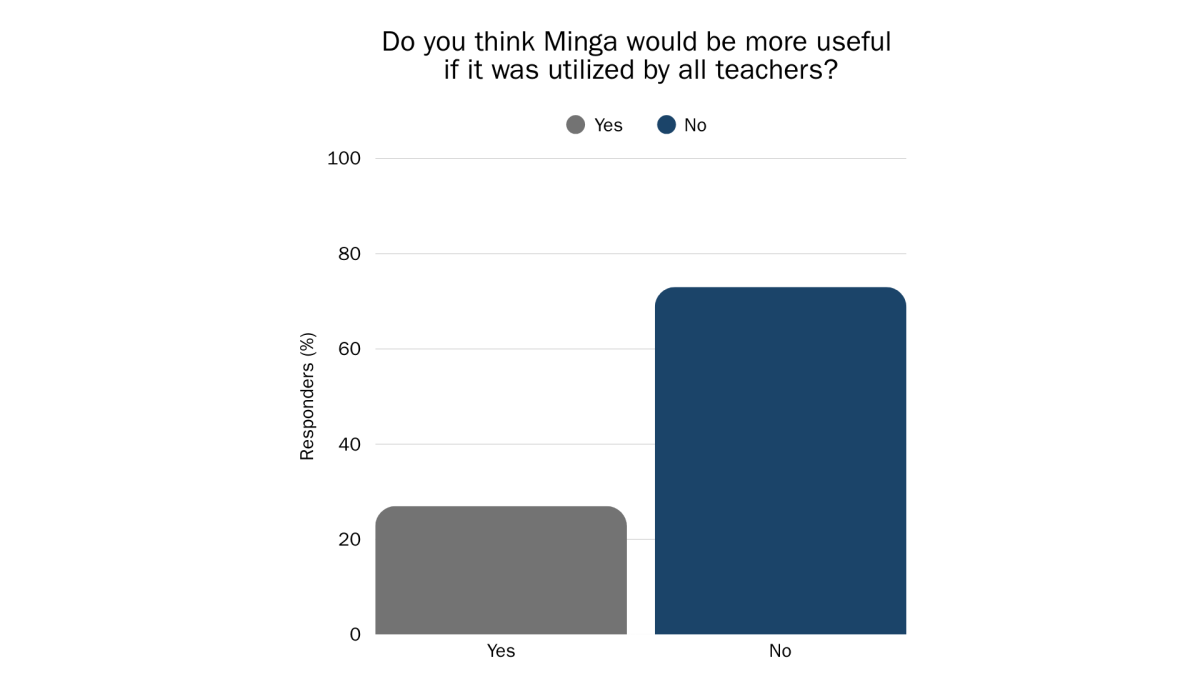
In order for a centralizing system like Minga to work well, its features must be used by everyone. It’s hard to generalize data to the entire school if only a portion of teachers are using Minga to track bathroom breaks. As a school, we must decide to go all in on implementing this platform, or cut our losses.
All About Minga & How Data is Used
From digital IDs to class council event notifications, Minga has been LAHS’s attempt at consolidating event organization on campus. Now, with the new hall pass function, they’ve extended its use to class time and participation. However, it’s nowhere near a perfect system.
Beyond some teachers still not using Minga hall passes, one of the system’s biggest flaws is students forgetting to sign back in once they’ve returned from their break. When a student’s hall pass runs out of time, whether they forgot to sign in or simply needed more time out of class, nothing is done about it — just like many other Minga features. We’re not advocating to punish students for their 8-minute water breaks; we’re simply saying that without action behind the system, Minga is essentially shouting empty words while shelling out more than $11,000 per year.
With the hall pass system just existing — serving no particular purpose beyond adding a step to leave class — Minga barely differs from TeachMore, our old ACT check-in system.
Aside from student life adjustments, Minga hall passes have also forced teachers to switch up existing systems. While some used to use open bathroom policies, sign-out sheets or physical hall passes, Minga now gives teachers a digital log of all passes. That compiled database should make it easier for teachers to notice trends, but Runeare said administration would not check them unless asked to.
“At this time, we won’t be independently looking at students, where they’re going and when,” Runeare said. “We don’t even have the time to do that.”
Hall Passes and Leaving Class
To gauge student opinions on Minga and its hall passes, The Talon conducted a survey on our Instagram story (with the assumption that the large majority of our followers are students).
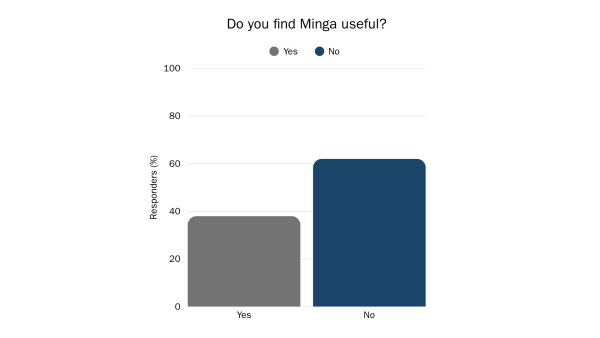
From our poll, 62% of students voted that they have not found Minga to be useful. From our experiences as and with students, we understand that logging out every time to use the restroom can be inconvenient and doesn’t appear to serve an immediate benefit.
We also understand the need — on occasion — to get out of the classroom. Each student has their reasons for needing a brain break, for example: not speaking the language that class is being taught in, struggling to focus due to ADHD or academic burnout weighing students down. There’s a spectrum of reasons that people miss class: on one end, people struggle with the curriculum and should get the help they need; on the other, students find class boring or “too easy.”
On top of that, the American Psychological Association accredits social media and technology with attention spans shrinking significantly. Minga will not address root issues of such students struggling to engage in class, but it may reveal patterns about students who skip on purpose.
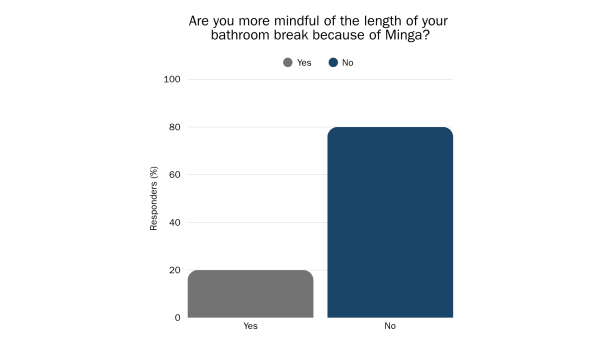
While this may not be the opinion of all students, our editorial board has noticed that we’ve become more mindful of the lengths and frequencies of our bathroom breaks since the implementation of Minga.
For Minga hall passes to be successful, there needs to be a verification process to confirm students out of class have a reason to be there. Maybe in the future, hall passes can be enforced through Student Conduct Liaisons. Minga is not the villain for us as students, it should be used as a tool to help students get more out of their learning.
Implementing Minga
As it’s been relatively convenient, The Talon worries whether Minga can truly function to organize school life when used inconsistently across campus. Students encounter ambiguous expectations for leaving the classroom when some teachers require digital hall passes and others rely on their own methods — making it impossible to fairly track all students’ time spent out of classes.
Teachers have the ability to address that shortcoming. Consistent implementation of Minga for each class period would not only clarify classroom procedures for students, it would also allow teachers to rely on shared data that’s representative of the entire student body.
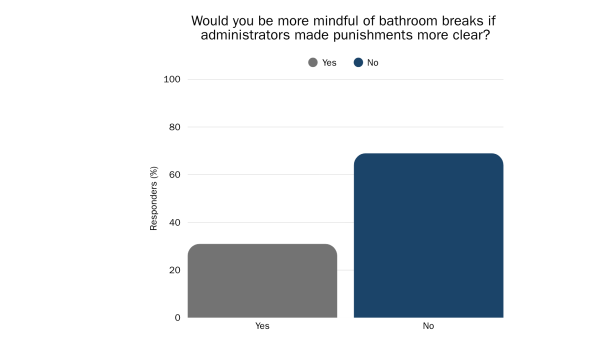
If LAHS decides to continue the usage of Minga, it must be implemented thoughtfully with full transparency for the students. With the exception of students’ special circumstances, any school-adopted system such as Minga should be enforced with uniform guidelines.
Without school-wide usage, Minga is merely an additional financial and time investment that isn’t conducive to classroom management or improving student accountability. Either LAHS commits to it fully, or we reevaluate whether Minga truly fulfills the needs of our school.