


Teenage fashion has always borrowed from the past, from vintage surfwear to Y2K. But what’s changing is the speed, authenticity and intentionality of that borrowing. With social media and the increasing mass consumption of clothes, fashion trends are now rising and dying at an accelerated rate. With the popularization of fast fashion, personal style has both become easier to imitate and harder to maintain.
At Los Altos High School, “finding your style” can be shaped by a mix of influences, including location, exposure to social media and the growing awareness of fashion’s environmental cost. In the middle of constantly shifting microtrends and esthetics, fashion at LAHS becomes a reflection of identity, influence and the pressure to stand out while still fighting in.
Rain or shine, you’re bound to spot students wearing sandals or beach shorts to class. It’s part of a surfwear fashion trend, thanks to LAHS’s proximity to beach towns and its larger place on the West Coast.
Surfwear features clothing designed for water sports — surfing, swimming or just hanging out on the beach. It was popularized in the 1950s when surfing began to define West Coast culture. Northern California beaches, particularly Santa Cruz, also known as “Surf City,” became central to that identity.
Senior Diego Casillas said he noticed the rise of board shorts from brands such as Billabong and Quicksilver.
“I was first introduced to surfwear when I was at Savers and saw it on the shorts rack section,” senior Diogo Perez said. “I was intrigued by the cool designs that older board shorts come with, as brands don’t seem to be making those styles of shorts anymore.”
What began as functional swim attire — boardshorts, waterproof fabric and relaxed silhouettes — gradually evolved into a lifestyle aesthetic associated with outdoor activity and proximity to a coastline. At Los Altos, where the beach is accessible but not enough to be a part of students’ daily routines, wearing boardshorts or surfwear-branded t-shirts is still appealing.
“I don’t surf but what draws me to surfwear is the comfort, fit, and the fact that it gets hot here,” Diego said. “The prevalence of surfwear also makes it easier to find in thrift stores, which is the main thing that influences my style.
“Surfwear may be a lifestyle for some, especially in places like San Diego,” Diogo said. “But honestly for me, it’s the comfort, as I wear my shorts to school because the length and size is similar to my other shorts.”
Footwear follows the same logic. Sandal brands such as OluKai, Birkenstock and Havaianas have been especially popular in the hallways. This spring, sandals are also often worn with socks — something Diogo said “hasn’t been as popular in previous years.”
As students’ fashion senses develop to become a part of their identity, these stylistic choices can also take on added meanings. Outfits that feel casual now may become much more significant later on, as teenagers leave for college and even move outside of California.
“Growing up in California has influenced my style,” Diego said. “All the clothes I’m buying were donated from people in the area, so their style is what I’m getting and bringing with me.”
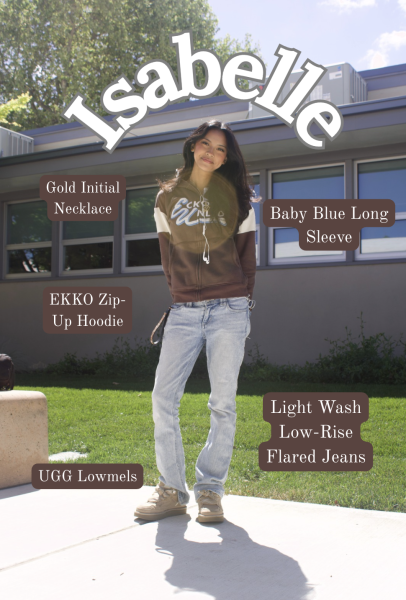
As “2026 is the new 2016,” fashion fell into a similar search for nostalgia, with the repopularization of Y2K — the aesthetic of “Year 2000,” literally. Students rock low-rise flared jeans, chunky gold jewelry and chic crop tops around the hallways.
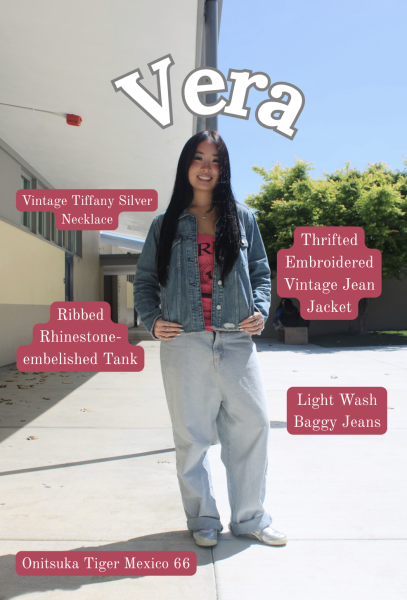
While Y2K’s return is mainly a national trend — with searches for “Y2K fashion” increasing by 650% since 2020 on Google Trends — it also carries a local connection.
“Since Y2K style was shaped by celebrities in places like Beverly Hills and Los Angeles, it feels more connected to us because that’s a part of California’s image,” senior Vera Lin said.
Classic elements of the 2000s include low-rise silhouettes, graphic tees and colorful accessories. While the era’s maximalist components, such as ultra baggy jeans, are still prominent in the revival, they’re often reinterpreted with wearability and comfort.
“Baggy clothing has been popular for many years and still is, but recently I’ve been noticing a lot of interest in slimmer-fitting pants — not completely tight, but loose,” Diogo said.
Instead of “skinny” and “baggy” being a binary, current popular denim styles slide right in between, characterized by straight-legged jeans which started trending again in 2025.
The appeal of Y2K extends beyond clothing, but culturally, too. Pre-social media, the 2000s featured celebrity tabloids, iTunes and fashion blogs. Trends circulated at a slower pace. For Vera, this era’s attractiveness came from reflecting a time perceived as less saturated with fast fashion.
“What I find more appealing about the 2000s is the nostalgia, and the sense that fashion was more experimental,” Vera said. “Today, a trend can become popular and feel overdone within a few weeks, but back then, styles seemed less controlled by algorithms.”
For some students, their clothing choices are inseparable from the brands and companies behind the outfit. For others, the environmental and labor impact of buying clothes is also a strong consideration. Increasingly, that means shopping secondhand.
“Occasionally, I do worry about the push of microtrends by social media, which typically only last a month and produce lots of waste,” junior Lucy Lai said. “I like how thrifting is becoming popular because it helps reduce waste and reject consumerism.”
Thrifting gained popularity in the 1960s due to the countercultural movement that rejected a consumerist lifestyle. That same mentality is often adopted today as fast fashion pushes consumerism to the extreme.
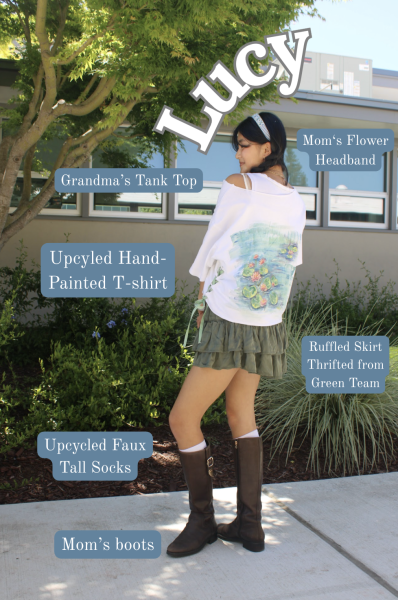
Each year, 85% of all textiles produced end up in landfills, while fast-fashion companies continue accelerating production cycles to keep up with rapidly changing trends. Shein, for example, can design, produce and package a new garment for delivery within one week, encouraging customers to purchase and soon discard inexpensive items.
On the other hand, thrifting may offer access to older pieces that many students feel are higher-quality and more distinctive. However, it’s not foolproof.
“Depending on where you look, there are quality vintage pieces that you just can’t find anymore,” Vera said. “But now, I’m also starting to see stores like Goodwill carry brands like Shein and Temu.”
Thrifting also offers lower prices and a wider range of styles. Since secondhand stores carry clothing from different decades, brands and styles, students can experiment more creatively with fashion while spending less money.
“Thrifting is the best way to get an affordable closet,” Diogo said. “The money people have in their wallet is probably enough to buy clothes for the rest of the year.”
When trends can spread almost instantly with social media, individuality becomes harder to maintain and reflect through fashion. Thrifting can help fight against this uniformity by offering a more unique selection of clothes, creating a sense of uniqueness within the fashion landscape.
“Thrifting maintains individuality in fashion because you’re unlikely to find the exact same piece as everyone else,” Vera said. “Even if a trend is popular, thrifting allows people to interpret it differently.”
In an environment bursting with variety, the most significant trend remains individuality.
“Through clothing, I’ve found a lot of joy and learned about my taste and who I am,” Lucy said.
Students said that stepping outside your comfort zone is essential to uncover new avenues of personal expression, even for veteran shoppers.
“I chose to wear this [pink] shirt because I’ve been pushing myself to wear colors,” Vera said. “Usually when I go shopping, everything I gravitate toward is black or gray, so I have to tell myself to go into the store and pick out color.”
Due to the modern trend-forward culture, the journey toward authentic self-expression can become muddled with the attempt to meet external expectations. But regardless of what others might think, the most compelling trend isn’t what’s currently on the racks — it’s the confidence and freedom in choice.
“When it comes to fashion, people can be judgy or egotistical, thinking their style is best,” senior Isabelle Smith said. “That doesn’t matter. Wear what makes you happy.”