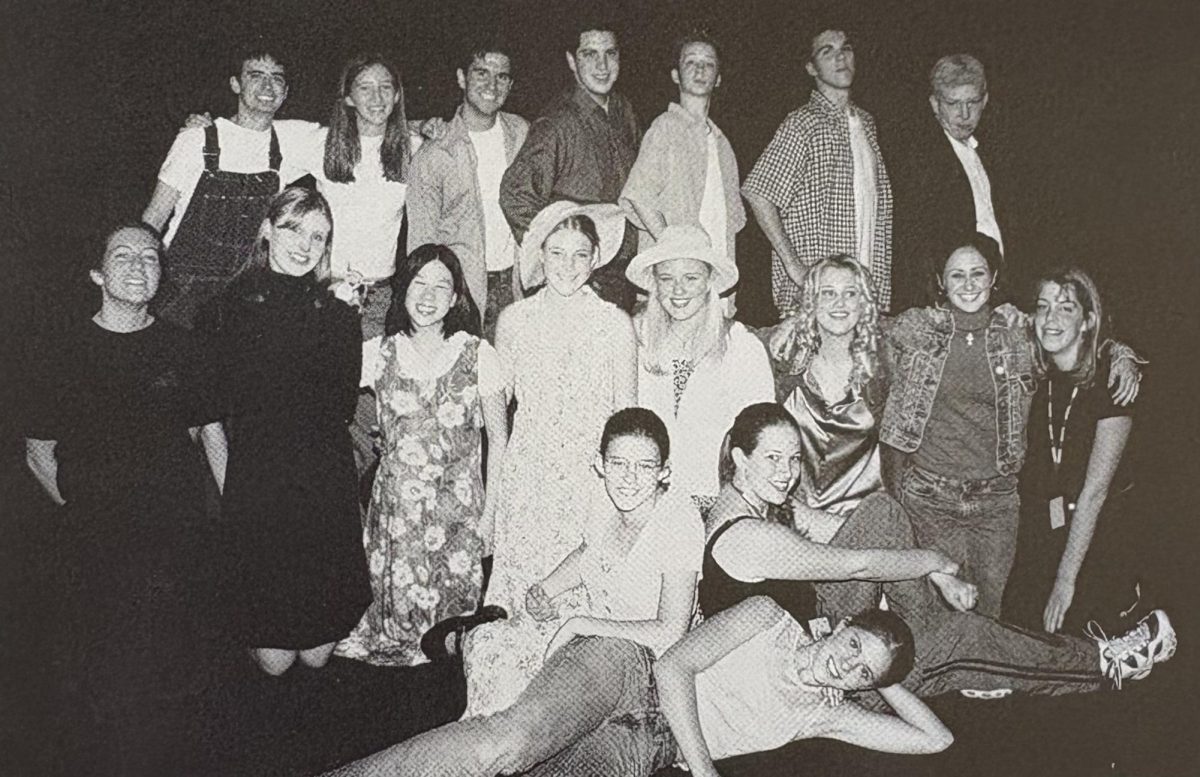



In 1995, charity organization War Child assembled an album, “Help,” that raised 1.25 million Euros to support children caught in the Bosnian conflict. Three decades later, the 2026 iteration of the album, ingeniously named “HELP(2)”, ensures that every stream and purchase will contribute to funds for children living through the “unthinkable,” particularly now as “violence erupts once again in the Middle East.”
Historically partnering with the music industry and the gaming industry, War Child takes the initiative in supporting children all around the world, this time by collaborating with 23 different artists.
While its parent album — with Radiohead’s “Lucky” and Oasis’ acoustic version of “Fade Away”— captures the distinctly 90s British band sound, “HELP(2)” invited artists from diverse genres to contribute to the visualizer “By Children, For Children.” At least, that was world-renowned filmmaker Jonathan Glazer’s vision for the album’s visualizer, which he directed and filmed.
“HELP(2),” released on March 6, features artists such as Arctic Monkeys, King Krule, beabadoobee, Foals, Big Thief, Fontaine D.C. and Olivia Rodrigo. Each brings a distinct interpretation of contributing to an album with this purpose, given its concept and close relation to war.
Though the album carries an underlying melancholy tone, plenty of songs are wistful and hopeful. Some artists explicitly mention war and politics, while others reinterpret lyrics not necessarily centered on them. This diversity is a defining feature of the album — each song could function as a single and across the two dozen artists, the songs cover a wide range of moods and genres.
Some tracks, for example, completely lean into intensity. “Warning” by Cameron Winter took me by surprise with its urgent and tense instrumentals, building an eerie sense of dread with its drilling strings and wild structure. The lyrics add to the sinisterness:
“There are plans that I have in this house, written down
And there are plenty of people that I can very easily call who can come over here within an hour
And do the work that must be done on your heart
There is so, so, so, so much work to be done on your heart.”
It sounds almost threatening, and the build-up of jarring background percussion grows unrest in the heart. And its uniqueness almost made me believe it’d be an odd one out in the album. But upon further listening, I realized there was no such thing as “odd.” Each singer reinvented and adapted their style to sculpt their own distinct voices into the album.
Big Thief’s “Relive, Redie” is a perfect example. Their raw and intimate vocals are immediately recognizable, evoking a deep, soul-touching tenderness signature to the indie-folk band. The song stays true to Big Thief’s vulnerable, gut-punching style in its chorus: “Who am I?/Relive, redie.” It’s not the type of music you’d want to hear on a sunny day.
Not every track is that heavy, though. In fact, “Let’s do it again!” by The Last Dinner Party is quite upbeat, with a straightforward structure and a single main melody, and progressing with a classic rock guitar background and theatrical singing. Though it is not a happy song, it’s a catchy one.
The long-awaited Arctic Monkeys single, “Opening Night,” did not disappoint either. After four years of inactivity, Arctic Monkeys dropped the track to a pool of thirsty fans and managed to pick up the pen they set down. The song is classic for the band: it’s loud and guitar-heavy, but also immediately captivating thanks to the irresistible chorus harmonies.
But if I could only pick one track to listen to, “When the War is Finally Done” by Foals takes the trophy. It strikes you with both the title and its beautiful composition. Its instrumentals diffuse inside your eardrums and rest there. There is no empty dimension; the vocals, percussion, strings and keyboard all work together. From Foals’ Instagram post, “The song is sung from the afterlife; a young soldier sent to war and expected to endure the unendurable.” It sticks true to that description, and somehow, through 3:47, there is a story arc from serenity to hope to exciting action. It is beautiful.
Although arguably incohesive in nature and fragmented by artist, “HELP(2)” does not try to produce one narrative. The songs in the album experiment with artistry, but like its predecessor album from 1995, “HELP(2)” will likely be remembered for its impactful cause above everything else.