



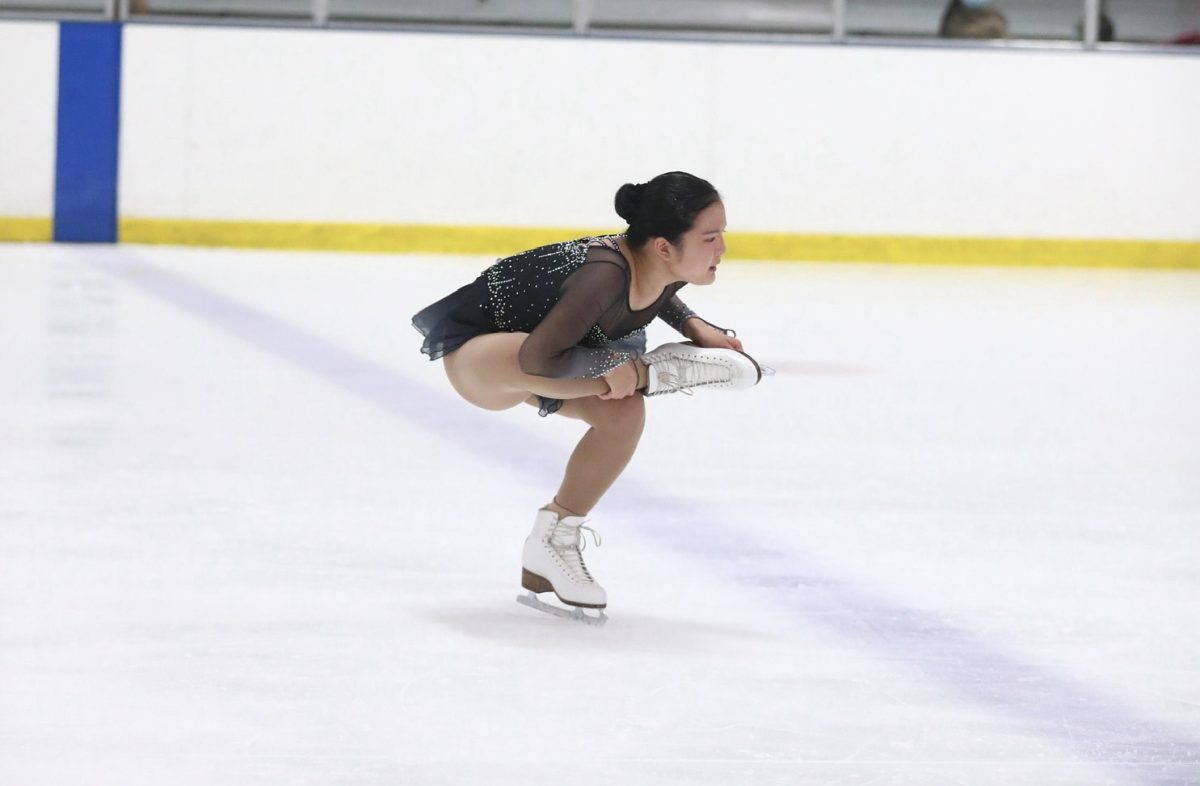
July, 2022. I stood on the second step of the podium, rink lights reflecting off the silver medal hanging around my neck — bright enough to appear gold if you didn’t look too closely.
At that Open Championship, I had landed all my jumps — even the lutz-axel combination I drilled until my joints were perpetually tender. Years of lost sleep and summers had been sacrificed just for a shot at winning. Instead, I got second place. I had done exactly what I was told would be “enough.”
Apparently, it wasn’t.
The cheering and applause faded into background noise as the girl next to me bit into her gold medal. I just kept smiling, because my face knew what to do even when the rest of me didn’t.
I wanted to feel proud. I wanted to feel even more fired up to improve, as I chased my dream to become a professional figure skater. I so desperately wanted to feel the same rush of excitement and passion I’d experienced after my first-ever competition.
Alas, all I felt was defeat and exhaustion. Dreadfully unfulfilled with my progress, I swore to never step foot on ice again — or, at least, that was the plan.
Comparison Culture
Six years before that podium, at a regional competition hosted by my home rink, I came across a fearless girl who consistently landed triple jumps at just 11 years old. She was only three years older than me, but considering the gap between our skills, she might as well have been a decade ahead.
The girl was Alysa Liu.
She would later go on to become the youngest U.S. women’s national champion (age 13), the youngest woman to land a quadruple jump at U.S. nationals (age 14) and one of the youngest to land a triple axel in international competition (age 13). As her name made headlines, it also started appearing more frequently in my lessons.
“You’re getting too tall; if you really want to land triples like Alysa Liu does, you might want to cut back on the calcium,” my coach would say. “Why can’t you just stick the double axel landing like Alysa Liu?”
Between each lesson, I rewatched Alysa’s programs obsessively. I would nit-pick, straining my eyes to spot underrotations, wobbly landings, traveling spins — any flaw that I could find. I convinced myself I was just learning from her mistakes, when in reality, I was attempting — and pitifully failing — to dull the sting of comparison with someone way above my technical level.
Eventually, my distorted love for figure skating dominated both my physical and mental being. As a middle schooler, my mornings began in 5 a.m. darkness, nearly alone on the ice, and ended in late-night dread over my next lesson with a coach who constantly degraded the way I looked.
I grappled with cognitive dissonance: somewhere within, I could still feel a waning, yet fiery passion motivating me to push through — the sole reason I ever stepped foot onto the ice. It’s just that, somewhere along the way, that original drive had become tainted by a toxicity I wholeheartedly believed was necessary to achieve my ultimate goal of becoming a professional athlete.
The burn from both my infatuation with figure skating and that which came with the gradual destruction of my body became painfully indistinguishable; I lost the courage or strength to isolate the two, much less redefine the value of skating for myself.
Even when I skated clean programs, I still felt absolutely nothing, because there was no physical reward for it. Subconsciously, the very artistry that made me fall in love with ethereal skaters like Yuzuru Hanyu — and which I hoped to embody — became increasingly secondary to the pursuit of measurable success.
What Quitting Meant
Alysa and I quit the same year: 2022.
At just 16 years old, she had already placed sixth at the Olympics and given figure skating the prodigy narrative it praised. But living alone at the Olympic training center was miserable. Burnt out, with little to no say in her schedule, diet, costumes or programs, Alysa ultimately developed a hatred for the sport. So, she chose to walk away and take control of her own life.
There was something disorienting about witnessing such an extraordinarily gifted athlete quit skating, then proceeding to do the same myself. In figure skating, endurance is a virtue. You continue skating, even through injury, growth spurts and doubt. Walking away before reaching one’s peak of success felt like a disruption of the entire framework I was taught: greatness and titles are worth the pain.
My act of quitting felt like giving up on a dream.
But Alysa’s felt like seeking agency. She attended college, and admirably lived her very own life — outside of skating.
Alysa Liu’s Grand Return
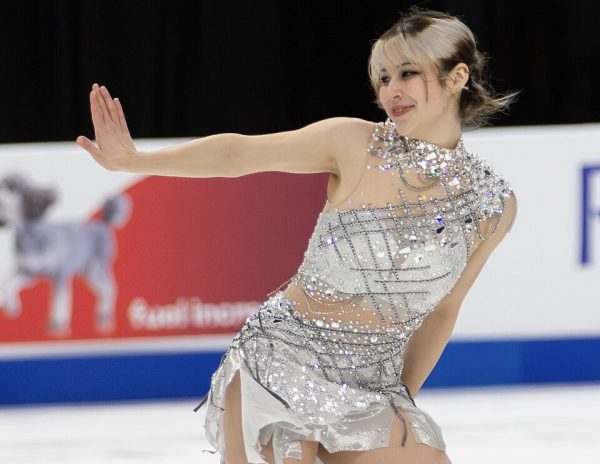
After Alysa returned to the ice two years ago, then competed in the 2026 Olympics, there was a clear shift in her skating style. Every program element felt personal. Not only did she skate to her favorite music artists — Donna Summer, PinkPantheress, Laufey — she also took ownership of her costumes and choreography.
What struck me the most was the way she carried herself with pure, joyful energy throughout all four programs. The ease that visibly coursed through her body made it seem like she was truly inhabiting the ice — fully appreciating the art of figure skating — instead of performing for some type of approval, as most competitive figure skaters do.
Those displays of passion did more for the sport than any quad or triple axel — none of which she needed to win gold — could.
It’s Not About Winning
As Alysa makes headlines all over again, I can’t help but think about the version of myself who quit at 14 — who once watched Alysa with envy and resentment, blind to the crushing pressures she was enduring. Back then, my bitterness was aimed at the many concrete achievements she had, and I lacked; I’d tied my love for skating so closely to external validation that I saw even second place as failure. I don’t feel that jealousy any longer (fortunately). But watching her make skating her own now reminds me: I never had to skate for anyone, or anything, but myself.
What moves me about Alysa’s accomplishments isn’t the records — though there are many — or even the fact that she ended the 24-year drought for U.S. women in figure skating. It’s the insistence that her life and skating belonged to her. That she could step away from a system which defined her so unfairly, and later return on her own terms to reshape her relationship with it. Watching her free herself from that once-suffocating athletic environment and embrace the ice again showed me something I never could’ve fathomed was possible. More than anything, her actions inspired me to stop burying my own skating journey beneath the lingering ache of my past frustrations.
Yes, writing this was difficult, but I’m forcing myself to soften up toward figure skating. I actually went to the rink earlier this month, for the first time in almost four years! Luckily, the bumpy ice and chaos of screaming children ragebaited me to the point where I had no mental capacity to replay old expectations. In fact, I didn’t attempt a single jump. I just did some silly spins and taught a friend how to do a forward crossover (shoutout Krystal Zhu). It was a simple, surprisingly fun experience. And for the first time in quite a while, I had no desire to prove I still belonged on the ice.
Maybe that’s enough for my “figure skating career.”
Looking Forward
I don’t want the future of figure skating to belong to whichever child can jump the most rotations before their body gives out. Although this is purely idealistic, I want it to belong to skaters who choose to be there — who move with artistic freedom and feel each note resonate in their bones.
Alysa didn’t just win (or “mog,” as she would put it). She reclaimed herself on the ice after discovering who she was off of it. And in doing so, she created space for the rest of us to imagine skating — even broader than that, living — for the sake of enjoyment and nothing else.
Alysa Liu, you are a true inspiration.