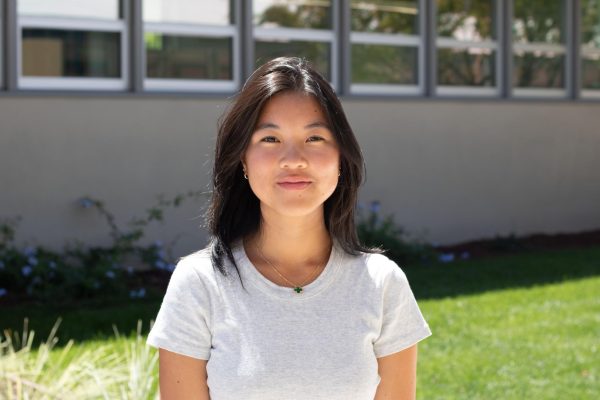


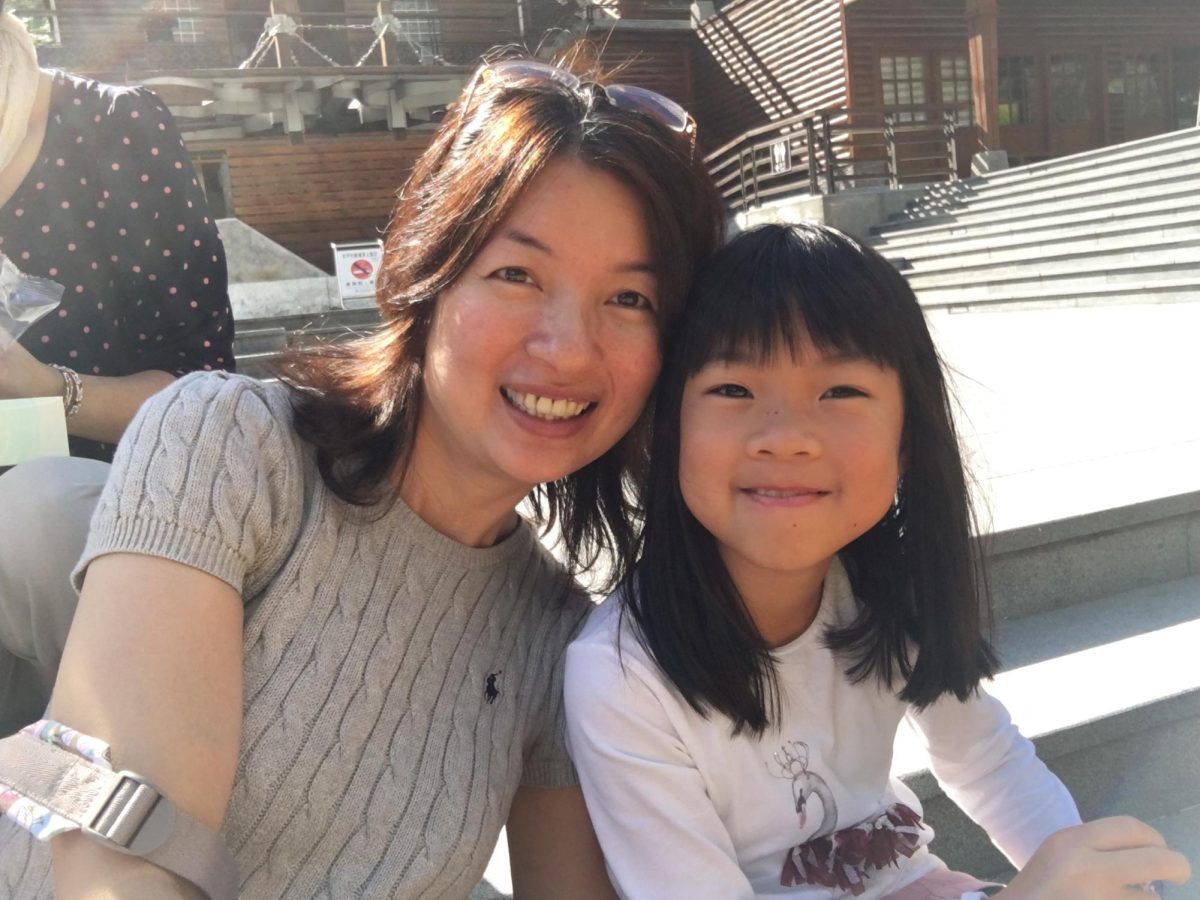
In some parallel universe, there exists a woman who never had me. She is still a successful businesswoman, but better rested and entirely her own person. She makes choices for herself alone. She’s able to envision a future without adding another human being into the equation of life.
I’ll never meet that woman who existed before I started calling her “Mom.”
I miss her because I want to meet who she was before “me.” It’s an absurd feeling to mourn someone whose existence required your own non-existence, but I feel it nonetheless.
In elementary school, I viewed my mom’s life through the narrow, selfish lens — typical of a kid. My clearest memory of second grade was being picked up — along with a dozen other kids — in a big white van that hauled us to “after school.” Absorbed in my math workbook, I would watch the sky outside turn dark and hear the doorbell start ringing. Each time a parent walked in to retrieve their kid(s), I’d turn my head, hoping that it was my mom.
Now 18 years old, I am aware that this was a common childhood experience, not particular to me. But in hindsight, I’d admit that I was jealous of the kids with stay-at-home mothers. Presence was the only metric of love in my mind. Where others probably saw a woman building her career, I saw Mom, who picked me up later than I preferred.
But maturity develops within the beholder, and I’ve realized that her time at work was what made my childhood comfortable. What once felt like absence now feels like sacrifice. Her workday didn’t bend to my wishes to go home earlier. I now envision my mother, sitting in the traffic of Highway 237 and staring at the clock, wanting to pick me up as badly as I wanted to go home.
And looking back, the after school program did seem to give me a weirdly high tolerance for boredom. I’m now great at staring at a wall.

As I’ve gotten older, I find myself wondering if I would’ve been friends with my mom, had we been classmates. I want to meet the teenage girl who was nervous about her final exams. I want to know what she talked about with her friends before her vocabulary was hijacked with, “How was school today?”
If I did meet her, it would be at some café in 1998. She would have been in her 20s, sitting with a cup of coffee, fixed on something that belonged entirely to her own life. I’d be just a stranger in the room.
I can only wish to be this stranger because I’ve only ever known her as “Mom.” It’s difficult to imagine her as someone who existed fully independently of me. No matter how old I grow, I’ll always see her as the woman who tucks me into bed at night.
Without meaning to, I see my mother as a fixed rather than an evolving person — as if once a woman becomes a mother, her past self holds no relevance to society and her children. The past is almost indulgent, and her dreams are either absorbed into her children’s futures or diminished as selfish nostalgia. In that way, mothers don’t simply raise their children. They disappear behind them while doing so.
For me, this disappearance has left a strange inheritance. I find myself wondering about the parts of my mom she never fully explored, interrupted by the responsibilities of becoming my mother. There must’ve been ambitions that didn’t exactly vanish, but were rerouted — deferred into things she might return to later, or maybe never.
Maybe this inheritance says just as much about being a daughter, especially knowing that I might go down the same path of motherhood one day. I catch myself admiring her sacrifices, without confronting why she needed to make them in the first place. And in doing so, I subconsciously accept loss as an inevitable consequence of motherhood: for my mom, other people’s moms and eventually, myself.
My parents planned to have me. But more than that, they committed to a version of life that included me, with all its unpredictability. She must’ve been aware of some things that she’d need to sacrifice once committing to motherhood, but this doesn’t make the trade-offs disappear. It makes them more meaningful.
With this in mind, I’m now honoring the life my mother has built for me, while wishing I had met a version of her before maternal responsibilities.
Seeing my mother as “Cynthia” doesn’t make her any less my mother. It makes her more human.
To my core, I believe that this recognition, as late and as imperfect as it may be, is the beginning of a different kind of closeness.
I want for both of us to exist beyond the roles we were assigned, from the very second I was born.