

When I was a sophomore, I realized that one of my close friends had distanced herself from our friend group for months. Concerned, I sought her out on a regular afternoon with one question: “Why?”
After an exchange of vague statements, she told me the underlying reason: she was sad, and had been for months — not because of family problems or social struggles, but because she didn’t feel like her achievements compared to everyone else’s around her. Isolation brought her comfort from that slimy feeling of “not enough.”
My friend certainly isn’t alone in this. Struggles with mental health aren’t new, especially for Bay Area students. In the 2024–2025 school year, 32% of MVLA students reported chronic sadness and hopelessness and 11% of students reported seriously considering suicide, consistent with or higher than many other California public schools.
However, the District has recognized and implemented measures to combat these issues. Therapists were granted permanent positions in 2019 following two suicides in Mountain View, and MVLA has expanded mental health advocacy for students since 2020. However, there has still been continued concerns regarding mental health in our District despite significant mental health improvements, with survey data showing students that reported seriously considering suicide dropping from 17% to eight percent. The problem of student mental health is far from resolved. But to effectively address this issue, it’s important to understand how it manifests, affects students and approach the community with an open mind regarding changing school culture.
The Manifestation of Pressure
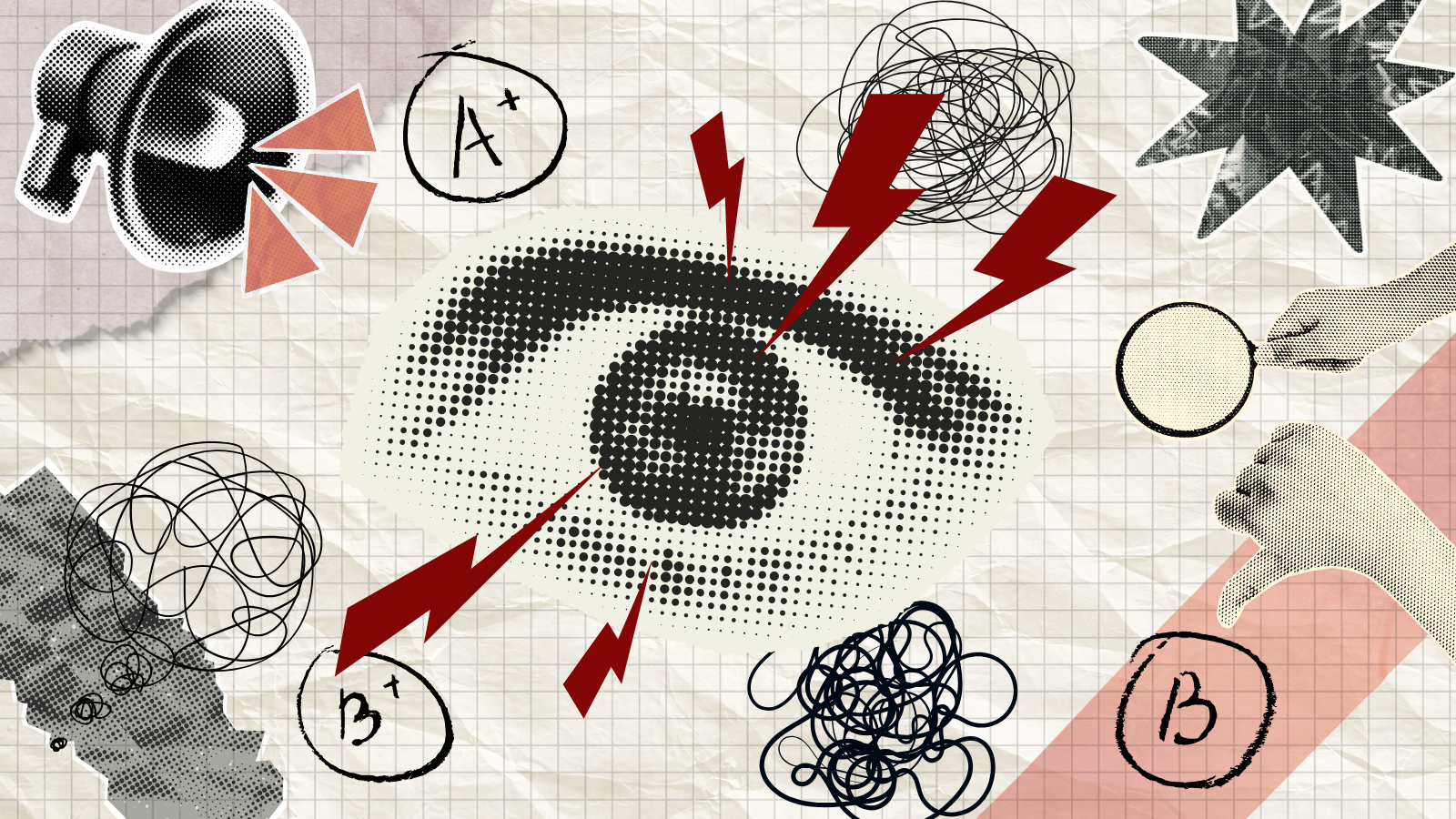
Los Altos High School is, without a doubt, a privileged place. We live in an area where an abundance of internships, AP classes and other academic opportunities make it easier for us to succeed. However, in turn, I’ve seen these opportunities put pressure on us students to constantly improve. It makes many students question if they have the right to struggle when others in the world have it worse. When speaking with friends, I was met with a similar sentiment: academic pressure is there, and they can feel it.
“It’s so pervasive,” junior Mazie Reidy said. “It’s something you can’t escape, even when you’re trying to relax.”
Not only that, stigmatized language surrounding mental health can make speaking up worse. The offhanded comments regarding serious topics that I hear people throw around often makes these topics seem less critical than they are.
“I can’t go a day without hearing someone say, ‘This test was so hard, I’m gonna kill myself’ or ‘I’m so depressed, I can’t do anything right,’” senior Ella Omura said. “I think that kind of language only adds to the stigma of actually feeling those emotions.”
This, of course, is no surprise to many students in the Bay Area. I’ve seen the academic culture here and it’s overbearing pressure on students, and the constant pressure to improve seeps into students’ mentalities. But the pressure here doesn’t just stem from the need to get good grades — it stems from the expectation to stand out for college.
“Being able to stand out has become exponentially harder in the minds of a lot of teens,” Ella said. “The Bay Area mindset is almost taking away…from discovering things that we’re actually passionate about.”
Yet, despite the community’s awareness of the relentless academic pressure, it’s never treated with the seriousness it requires. I believe that mental health is not seen as a critical issue among the minds of students despite the prevalent effects it’s had on us. I’ve seen friends dismiss concerningly low hours of sleep — sacrificed to study for tests — and classmates holding back tears at a B.
“Mental health is this known thing that we all feel, where we all know that we’re stressed, but nobody really says how tough it is,” Mazie said. “We just joke about it.”
The LAHS Philosophy of Success
The harmful culture surrounding academic success, which is so evident everywhere in our school, begged the question: what was LAHS’s role in this?
Overall, it’s hard to say whether or not the school itself contributes to a culture that’s so woven into our community. Rather, I’m drawn to the nature of our city. LAHS faces its own unique pressures due to the high class status our city harbors, with the median income being over $250,000 . We live in a bubble where we are conditioned to believe immensely successful people are the standard of success — and failure isn’t an option.
Along with the high class status of Los Altos, the school’s physical proximity and emphasis on top universities like Stanford and the UCs may add to the academic expectations at LAHS. I’ve heard LAHS be described as a “feeder” for many highly competitive universities, as many LAHS graduates get accepted into these top schools, with five students already accepting Stanford admission from this year’s graduating class. When talking to one of my teachers, she reflected similar thoughts.
“We have some of the nation’s and the world’s wealthiest people living here in Los Altos, and who have achieved a certain level of socioeconomic status,” AP Psychology and Ethnic Studies teacher Kathryn Kim said. “Every generation is preoccupied with how to replicate the same class status for their children.”
“I was talking to some of my freshmen recently about where they want to go to college, and so many of them say, ‘I want to go to Stanford,’ or ‘My mom wants me to go to Stanford,’” Kim said. “Everyone wants to go to Stanford…Stanford is like the be all and end all.”
The prevalence of academic pressures in our environment is difficult to grapple with, and not something that can easily be addressed through simply spreading awareness or encouraging self-caring practices.
“It is really tricky to say that through therapy or through a check-in with a counselor that you would be able to ever fully cope with an environment that is so pervasive,” Kim said. “It’s like the water that you swim in and the air that you breathe.”
Coping with Constant High Standards
While the academic pressure can seem impossible to escape, LAHS offers various resources —on-campus therapists, the Eagle Escape and anonymous report forms — that can help. However, despite the several mental health resources that are offered by the school, the friends I talked to reported that they don’t find themselves using these resources all that much.
“It’s great the amount of resources that our school provides and maintains, but I think the biggest problem is that people don’t actually have that much trust in these resources,” Cerise said.
“How do you even stop academic pressure when it is so deeply ingrained into how the student body functions…and how people perceive success?” Mazie said. “I think we’re all very aware of the environment that we’re placed in, and we do what we can in our daily lives…to give ourselves a break. But is it enough? I don’t know.”
Further, as academic pressure and high expectations are widely believed to fuel mental health issues and suicides in Silicon Valley, there’s an underlying worry I have that these patterns are at risk of becoming an integrated trend in the Bay Area, with each new headline or statistic becoming “just another part of the culture”.
“With every new headline or article, people become a little more desensitized to suicide,” Cerise said. “That’s reducing some of the attention people give to it.”
A clear-cut solution to our culture problem, however, is difficult to find. I believe high academic expectations are deeply woven into our culture, and as a student who has seen how academic pressure permeates our community, it feels almost impossible to change these standards permanently. After reaching out to one of the on campus therapists for insight, they emphasized the importance of engaging in stress management practices to cope with the environment.
“When things get stressful, it’s easy for students to be hard on themselves,” on-campus therapist Liz Cho said in an email. “Students often juggle many different commitments and responsibilities so it’s important to find a healthy balance and also make time for rest and activities they enjoy. Taking breaks and allowing for time to recharge can help prevent burnout and support overall wellness.”
Addressing the Harmful Culture
Despite the undeniable pressure in the Bay Area, students still have hope for how our community can move forward. In fact, there have been reports that academic motivation has improved this year. Ella said that getting teachers more involved in directing students toward available resources can help students get more benefits from them. Cerise said that on the parent communities’ end, taking initiatives to understand the stress in the Bay Area and supporting their children more actively can help with combating the isolation students feel. And as students, we can still change the way we talk and perceive academic success.
I’ve been at this school for three years. From freaking out in freshman year over an A- and feeling crushing disappointment over my first B in Chemistry Honors — not knowing then it wasn’t the end of the world — I’ve come to understand there is more to learning than a perfect A+.
And yet even with that understanding — from just being in this community — self-deprecation and comparison with peers feel like second nature every time a grade is anything less than perfect. It doesn’t take a genius to realize that this learning environment isn’t healthy.
We need to change how we perceive learning and recognize that undergraduate college isn’t the end of the road. And that shift starts with being kinder to ourselves and changing our definitions of “success” to reach beyond a picture-perfect college resume or a STEM job at a tech company.
I’ll admit, this isn’t easy. Even as I write this article and acknowledge these issues, the idea of breaking away from the culture is scary — especially as someone who has grown up to think academics are the be all and end all. It’s extremely hypocritical of me, I’ll say, but it goes to show how difficult it is to pull away and how toxic this culture is. But what’s even more terrifying is the pattern of toxicity continuing for years to come, something that’s on track to happening if we don’t change.
Suicide and mental health struggles happen for all kinds of reasons — personal grievances, loss, academic pressure or hopelessness. But we can’t ignore the glaring issue of academic pressure in our Silicon Valley community — something we’re all aware of — any longer.
No matter the amount of mental health resources offered or policies passed by the school board, this problem will remain stagnant if parent and student communities don’t make their efforts to address it — and it’s far past due time to do so. When it comes to mental health, isolation can fuel negative feelings. Even something as simple as sitting your child down and genuinely asking them how they’re feeling or checking in on a stressed peer can make a world’s difference. Taking an effort to understand and validate what others are feeling and making sure they know they’re not alone is critical.
Our intense and demanding student culture needs to change — and that change starts with us.
If you or someone you know is struggling with suicidal ideation or thoughts of self-harm, please call or text 988. You are not alone.
Annabelle | May 26, 2026 at 1:15 pm
well said ananya ts so peak
v | May 25, 2026 at 2:00 pm
Personally, my solution to drop out out of High School and attend Foothill instead because the competition isn’t as bad.
Unfortunately, not everyone can do that.